

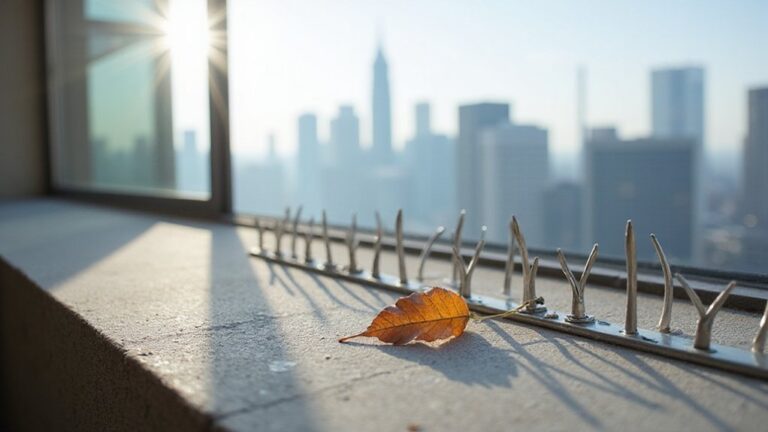
If birds keep landing on your property and causing trouble, you might wonder how to stop them humanely.
Bird spikes are a popular solution—they act as a physical barrier that prevents birds from landing without hurting them. Made from materials like stainless steel or plastic, they are effective when installed properly on all flat surfaces.
Keep reading to learn how to choose and install them the right way.
What Are Bird Spikes and How Do They Deter Birds?
Bird spikes are a humane physical barrier designed to prevent birds from landing on surfaces like ledges, signs, or rooflines. They work by targeting natural bird behavior—primarily the need for a flat, secure foothold. The thin, stiff rods create an uneven, prickly surface that makes the area uncomfortable for perching. These spikes do not trap, poison, or harm birds; instead, they make the spot undesirable, encouraging birds to seek alternative locations. Over time, birds learn to avoid the area altogether. To ensure effectiveness, it’s essential to cover the entire surface without gaps, and keeping surfaces clean helps the spikes stay securely in place. When selecting a product, it is important to consider the top options for durability and material quality. Unlike some methods that capture pests, these spikes rely on a humane physical barrier that simply discourages landing without causing injury. Using bird spikes is a responsible way to protect property while respecting the well-being of birds. For a similar approach targeting smaller pests, you could use cheap materials like toothpicks or straws to create an uncomfortable landing zone.
Stainless Steel vs. Plastic Spikes: Which Material Fits Your Needs?
Stainless steel is the more durable material, with a lifespan of 10 to 15 years or more. It resists harsh weather, rust, and corrosion, making it ideal for coastal, industrial, or humid environments. Plastic spikes typically last around 5 to 10 years, but can crack or degrade faster due to UV exposure or freeze-thaw cycles. Plastic is lighter, less expensive initially, and less visible, making it suitable for residential ledges. However, if you need a long-lasting, heavy-duty solution, stainless steel‘s higher upfront cost can pay off through fewer replacements over time. For instance, while a beekeeper’s suit is designed for proven protection against bees, the same material durability principles apply when selecting robust, long-term bird deterrents. Unlike stainless steel, plastic spikes can be vulnerable to gnawing from pests that are known to chew through chicken wire due to its weaker structural resistance. Birds may also be deterred by a well-placed squirrel baffle that prevents access to feeders, applying a similar principle of physical exclusion to your chosen spike material. Choose your material based on your budget, environmental conditions, and the desired longevity.

【Highly durable stainless steel material】QIEGL bird spike stabs and base are made of 304 stainless steel which is rust and Sturdy, This flexible bird spikes will not get rust or weaken when exposed to the environment or leave unsightly rust stains on your property.
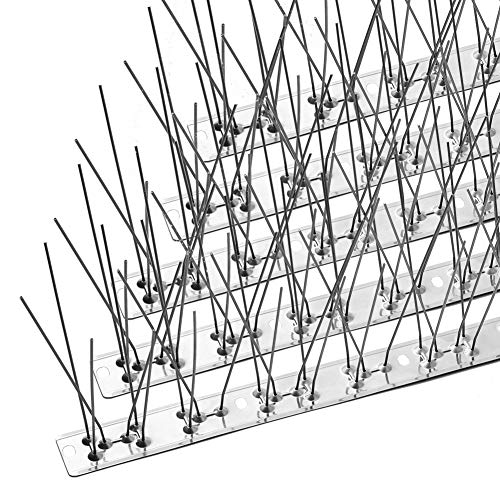
Efficient and Humane Bird Spikes: The stainless steel bird spikes imitate the structure of thorn plants and have bright surfaces that can reflect the sunlight. It makes good use of birds' weaknesses to help you solve the problem of excessive droppings and messy nesting
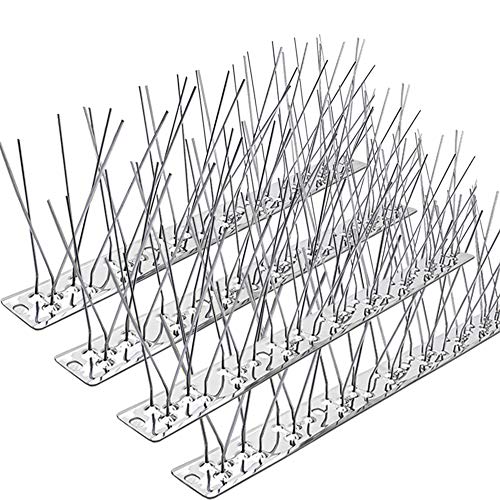
EASY TO ASSEMBLE AND INSTALL - This set of PANGCH pigeon spikes come disassembled. There are 3 holes (0.315”x0.216”) per strip for mounting purposes. You can anchor with a zip tie, screws, double sided tape, construction adhesive, etc. These bird spikes can be taken down when you don’t need them or remain in place year round.
Do Bird Spikes Hurt Birds or Just Block Landing?
Bird spikes are designed to prevent birds from landing, not to injure them. They act as an uneven surface that makes perching difficult instead of a trap. Properly installed spikes feature blunted tips and flexible mounts, so when a bird briefly contacts them, it feels uncomfortable but not harmed. This creates an unstable perch that encourages birds to choose elsewhere to land. According to tested results on the topic, even minor injuries are rare when spikes are correctly fitted with blunted tips and flexible mounts to minimize impact. For example, just as UV light traps use specific wavelengths to repel pests effectively, bird spikes rely on physical discomfort rather than harm to achieve their purpose. Note that wasp spray, often misused for bird deterrence, also has an expiration date that affects its safety and efficacy. Poor installation or using the wrong size spikes can cause issues and potentially harm birds. It’s important to ensure spikes are appropriately sized for the target species and are well-maintained. If you feel uncomfortable using spikes, consider humane alternatives such as netting, sloped surfaces, or gel repellents. These options block landing without causing injury, offering a more compassionate way to protect your property.
Where to Put Bird Spikes So Birds Can’t Land
Bird spikes should be installed directly on all primary landing areas where birds tend to perch. Focus on high-priority zones such as roof edges, ledges, window sills, and parapet walls. Cover entire surfaces of these spots end-to-end, ensuring no gaps remain so birds cannot find footholds. Place strips along the outer edge of ledges and protrusions to block access to perching. Also, include structural surfaces like gutters, eaves, and chimneys, as these are common perching sites that attract birds. When choosing materials, look for durable galvanized stainless steel to ensure long-lasting performance and value. For flat roofs, set up spikes around the perimeter near parapets to prevent landings. When installing, ensure spikes are positioned exactly where birds land instead of nearby spots, or they will simply shift to an open area. Cover entire access routes such as roof lines, signs, and beams with continuous, full-width spike strips to eliminate any landing opportunities entirely. Before positioning each spike strip, ensure the surface is fully clean, disinfected, and dry to maximize adhesive and screw effectiveness. For problem areas where gnats also congregate, consider using a vinegar-based trap as a complementary pest control method. For mounting spikes on wooden surfaces, consider attaching them to sturdy fence posts for stable support.

Efficient and Humane Bird Spikes: The stainless steel bird spikes imitate the structure of thorn plants and have bright surfaces that can reflect the sunlight. It makes good use of birds' weaknesses to help you solve the problem of excessive droppings and messy nesting

Physical Space Occupation: The dense bird spikes occupy physical space to keep birds from landing and nesting on balcony surfaces, railings, and ledges, effectively solving the trouble of bird droppings pollution and maintaining clean and tidy building exteriors.

【SAFE AND EFFECTIVE HUMANIZED DESIGN】-Our bird spikes imitate the structure of thorn plants to visually discourage birds from landing and help keep reptiles from approaching food in a gentle, non-harmful way. The bright stainless-steel surface reflects sunlight to enhance the visual effect, helping reduce visits from pigeons and other small animals.
Step-by-Step: How to Install Bird Spike Strips on Ledges and Pipes
To install bird spike strips effectively, start by measuring your ledge or pipe accurately and marking the sections where you’ll place the strips. This ensures proper alignment and coverage. Clean the surface thoroughly with a scraper and wire brush to remove guano, dirt, and debris; a clean surface promotes better adhesion. Dry the area completely before applying any adhesive or fasteners. For ledges, apply a consistent bead of adhesive along the base of the spikes, pressing firmly to push adhesive through the base holes, which secures the spikes tightly. For added durability, combine the adhesive with stainless-steel screws, attaching them through the base holes into the surface. When working with pipes, use UV-resistant zip ties or hose clamps; wrap these tightly around the narrow part of the spike base to hold it securely. If installing multiple strips on longer sections, add extra ties for stability. For broader bird exclusion needs on water features, pond netting provides a reliable alternative for covering larger surfaces. Ensure the strips sit flat against the surface and align end-to-end without gaps to prevent birds from finding gaps to perch on. Use rust-resistant fasteners, such as stainless steel, to prevent corrosion over time. For a neat appearance, choose spike colors that blend with your surface to create a professional, less conspicuous installation. For areas where birds are particularly persistent, consider using a spinning squirrel-proof feeder to distract them away from ledges. Finally, allow the adhesive to cure fully before exposing the spikes to any stress or environmental factors. For broader bird exclusion projects, consider specialized bird netting designed for trees and large areas to complement spike installations.

DURABLE STAINLESS STEEL SPIKES: Bird-X bird spikes feature corrosion-resistant stainless steel spikes mounted on a strong polycarbonate base for long-lasting outdoor bird control.
EASY TO ASSEMBLE AND INSTALL - This set of PANGCH pigeon spikes come disassembled. There are 3 holes (0.315”x0.216”) per strip for mounting purposes. You can anchor with a zip tie, screws, double sided tape, construction adhesive, etc. These bird spikes can be taken down when you don’t need them or remain in place year round.

Provide Enhanced Protection: Make any area a landing-free zone with the Bird-X Bird Spikes that work as a physical barrier to scare birds away and prevent birds from landing, perching, roosting, or nesting on the surfaces wherever spikes are applied
Common Installation Mistakes That Let Birds Slip Through
Leaving the front lip exposed creates a landing point birds can exploit. To prevent this, overhang spike strips by about half an inch. Gaps between strips also serve as landing spots; therefore, sections must butt together with no breaks. On wide ledges, a single row of spikes is insufficient because birds can perch between the tips. Use multiple rows spaced no more than 2.5 inches apart to block landing spots effectively. Choose spike sizes appropriate for your target bird—shorter spikes are better for larger birds that might land behind the pins. Poor surface preparation can cause the spikes to detach, reopening landing zones, so ensure the surface is thoroughly cleaned and dried before installation. Also, seal any openings behind the spike line; otherwise, birds may bypass the deterrent entirely. Always review installation safety guidelines and local pest control regulations before beginning your project.

Effective Bird Spikes: Our bird spikes are designed to prevent birds ,cats, pigeons, cats, squirrels, and other animals from approaching your crops, ledges, fences, windows, roofs, feeders or property.

[Color & Coverage Length]: Includes 6-pack white bird spikes providing 6 feet of total coverage, perfect for roofs, ledges, fences, railings, gutters, and other outdoor surfaces to deter pigeons, sparrows, crows, seagulls, squirrels, and other unwanted birds.

Physical Barrier Design: Stainless steel bird spikes feature multiple upright wires.The flexible strip structure creates a simple physical barrier while maintaining a slim, low-profile appearance
When Bird Spikes Aren’t Enough: Pairing Them With Other Deterrents
While bird spikes are effective at preventing perch points on narrow ledges, they won’t stop birds from landing on nearby roofs, signs, or beams. That’s why combining spikes with other deterrent methods is crucial. Use bird netting to cover larger open spaces, blocking birds from accessing wide areas. Bird wire installed on wide surfaces can create unstable landing zones that discourage birds from settling. For open zones and areas prone to adaptation, visual deterrents like reflective tape or predator decoys can be highly effective—changing the visual cues prevents birds from becoming accustomed. Optical gels applied on signs or rooftops add a tactile and visual layer of deterrence. Sonic devices are also useful in areas where physical barriers aren’t practical, emitting sounds that repel birds without obstructing the space.
This multi-layered approach targets various landing behaviors simultaneously, making it harder for birds to find untreated spots. Relying solely on spikes often won’t suffice against persistent birds, but pairing them with visual and exclusion methods extends the effectiveness and longevity of your bird control efforts.

Size: Deer netting size 7 feet x 100 feet; garden netting mesh size 3/4"; color: black; Easy to use accessories included: 10pcs installation nails & 50pcs cable ties

【Protect Your Flock from Hawks & Predators】Designed as a chicken coop netting roof cover, this 1-inch mesh bird netting helps create a protective barrier against hawks, owls, eagles, and other aerial predators. The durable poultry netting also helps deter raccoons, foxes, and other unwanted visitors while keeping chickens safely contained within the run.
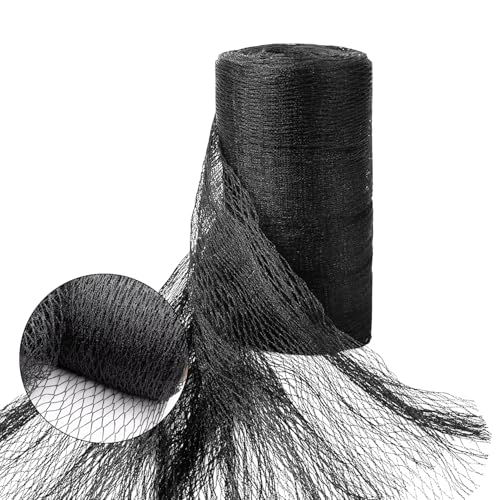
Bird Netting for Chicken Coop: Cover your chicken run, chicken pen, or poultry fence with our large mesh netting to keep predators like hawks, owls, foxes, and raccoons out. Our aviary netting with 1 inch mesh size effectively prevents small animals, such as rabbits and mice from entering, unlike bird nets with larger 2.4 inch holes. This poultry netting also prevents your chickens from escaping and wandering into your garden or neighbor's yard, protecting your plants and vegetables