
Yard pest and predator control
Find the threat.
Pick the tactic.
Buy once.
You walk outside with your coffee and something is wrong. A row of hostas chewed down to stems. A ridge of soil pushed across the lawn overnight. Bites on your ankles before you reach the mailbox. This site helps you name what did it, choose the tactic that actually works on that animal, and buy the right gear the first time instead of the third.
Every recommendation here is built from manufacturer specifications, published documentation, and verified owner reports. We do not perform hands on field testing and we never claim to.
01
Three ways to win the yard
Almost every yard problem is solved by one of three moves. Shut the animal out. Make the spot feel wrong. Or take the animal out. Try them in that order, because the order is also the order of how long the fix lasts.
A fence works while you sleep. It works in the rain. It does not need reapplying in six weeks and it does not stop working because you got busy. A spray is faster and cheaper, but it is a chore you have signed up for. A trap solves one animal today and does nothing about the next one that wanders in. None of that makes sprays or traps wrong. It just means you should know which one you are choosing and why.
01
Exclude
Fencing, netting and barriers
Put something solid between the animal and the thing it wants. This is the only tactic that keeps working when you are not home.
A rabbit walks straight through 2 inch mesh without slowing down. Drop to 1 inch mesh, bury the bottom 6 inches, and the same fence line holds all season. The fence did not get stronger. The hole got smaller.
Deer
Rabbits
Birds
Garden beds
02
Repel
Sprays, repellents and deterrents
Make the spot taste, smell or feel wrong, so the animal picks a different yard. Cheap to start, but it is a schedule you now own.
Castor oil does not kill moles. It coats the soil and the grubs and earthworms they feed on, so the tunnel stops being worth digging. That also tells you its weakness. It has to be watered in, and heavy rain sends you back out with the sprayer.
Moles
Mosquitoes
Roaches
Read the label
03
Remove
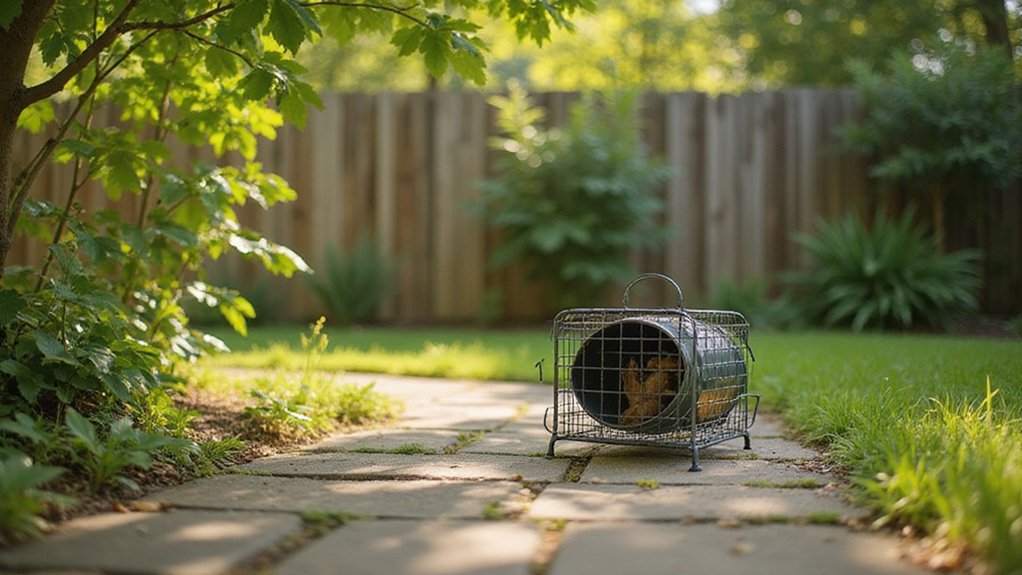
Traps and trapping guides
Take the animal out when a barrier is not practical and a repellent keeps washing away. Fastest result, smallest reach.
A single mole can push more than 100 feet of surface tunnel in a day, which is why one animal can look like an infestation. Trapping the active runway settles it quickly. Check your state and county rules first, because trapping and relocation law varies a lot.
Moles
Mosquitoes
Rodents
Check local law
02
Start with your animal instead
Most people do not arrive thinking about tactics. They arrive thinking about deer. So here is the same system read from the other direction. Find your animal, see which tactic carries the most weight against it, and go straight to the guide that covers it.
The marks are not scores. They are a plain statement of what usually holds. A filled dot means this is the tactic to reach for first. A hollow dot means it helps, but on its own it will disappoint you. A dash means it is rarely worth the money for that animal.
| Threat | Exclude | Repel | Remove | Start here |
|---|---|---|---|---|
| Deer | ● | ○ | — | Best fencing for deer |
| Rabbits | ● | ○ | ○ | Best chicken wire fence for rabbits |
| Moles | ○ | ● | ● | Best castor oil repellent for moles |
| Mosquitoes | ○ | ● | ● | Best mosquito traps for outdoors |
| Roaches | ○ | ● | ● | Best bug bomb for roaches |
| Birds on beds | ● | ○ | — | Best garden netting setup |
03
Latest field briefs
New guides as they go up. Each one opens by naming the situation it covers, so you can tell in about four seconds whether it is your problem or somebody else’s.

4 Havahart Traps That Finally Stop Chipmunks in Their Tracks
Make your garden chipmunk-free with four Havahart traps designed for effortless, humane capture.
DIY Pump Sprayer: Cheap & Simple Build Guide
Why build your own pump sprayer for less? Get full control over durable, leak-free parts.
8 Best Bug Bombs That Send Spiders Packing for Good
Looking for the 8 best bug bombs that actually make spiders flee for good – here’s the list.
How Long Does Wasp Spray Last on Surfaces? What to Expect
Know how long wasp spray lasts on surfaces—up to 90 days indoors—but that’s not the whole story.
10 Best Bird Netting for Strawberries That Actually Keep the Pests Out
Keep your strawberries safe from ravenous birds with these ten proven netting picks.


04
When each threat peaks
Almost nobody buys a deer fence in August. They buy one in November, after the browse line is already chest high and the shrubs are gone. That is the expensive way to do it, because by then you are replacing plants as well as buying wire.
Pressure in a yard is seasonal and fairly predictable. Deer lean hardest on landscaping in late fall and winter, when wild forage runs out. Moles work the soil in spring and fall, when it is soft and full of earthworms, and go quiet in the heat of summer. Mosquitoes need warmth and standing water. Rabbits do two separate kinds of damage: bark gnawing in late winter, then tender new growth in spring. Read the row for your animal, then buy a month before the dark band starts.
Threat
Jan
Feb
Mar
Apr
May
Jun
Jul
Aug
Sep
Oct
Nov
Dec
Buy before this
Deer
Peaks October to March. Fence in late summer.
Moles
Two peaks: March to May, then October and November.
Rabbits
Bark in late winter, then new growth April to July.
Mosquitoes
Peaks June to September. Clear standing water in May.
Roaches
Peaks May to September, then they move indoors.
Peak pressure
Building
Quiet
Windows describe typical activity across much of the continental United States and are drawn from published extension service and wildlife agency guidance. Your own peak shifts with climate zone, elevation and a mild or hard winter, so treat this as a planning guide rather than a calendar entry.
05
Get the size right before you spend
Most barrier failures are not brand failures. They are size failures. The fence was a foot too short, or the mesh was an inch too wide, or nobody buried the bottom edge and the rabbit simply went under it. Fixing that costs a second purchase and a lost weekend.
Two numbers decide almost everything. Height decides whether the animal goes over. Mesh size decides whether it goes through. Here is the height each common threat calls for, drawn from published extension service and manufacturer guidance.
Barrier height by threat
Heights reflect common extension service and manufacturer guidance for the continental United States. Bars are drawn to a 96 inch scale. Local conditions, deep snow cover and high deer density can all push the working number higher.
And the mesh number that goes with it
Height stops the jumpers. Mesh stops the squeezers. A young rabbit gets through a gap far smaller than most people expect, and voles and mice need almost nothing. This is the part that most people get wrong on the first purchase.
| Threat | Mesh opening | Buried edge | Common material |
|---|---|---|---|
| Deer | 1.75 in. or smaller | Not required | Poly deer netting or woven wire |
| Rabbits | 1 in. or smaller | 6 in. | Chicken wire, hex netting |
| Groundhogs | 2 in. or smaller | 12 in. | Welded wire |
| Voles and mice | 0.25 in. | 2 to 3 in. | Hardware cloth |
| Birds on fruit and beds | 0.75 in. or smaller | Not required | Bird netting on a frame |
Barriers
Best fencing for deer
Settles: how tall, what material, and whether a slanted fence lets you drop to 6 feet.
96 in. upright
1.75 in. mesh
Where it falls short: a short fence on a small lot can make things worse, because a deer that clears it once will clear it every night.
Barriers
Best chicken wire fence for rabbits
Settles: the mesh size that actually stops a young rabbit, and how deep the bottom edge has to go.
24 in. tall
1 in. mesh
Where it falls short: laid on the surface instead of buried, it fails in a week. Rabbits dig, and they find the seam.
Repellents
Best castor oil repellent for moles
Settles: granule against liquid concentrate, coverage per bag, and how often you are back out there.
Water in after applying
Reapply after heavy rain
Where it falls short: it moves moles around rather than removing them. On a small lot, that can mean your own back yard.
06
How we decide what to recommend
You should know how a recommendation was built before you trust it with your money. Here is exactly how ours are put together, including the part most sites leave out.
01
Start from the specification
Height, mesh opening, wire gauge, coverage area, active ingredient, reapplication interval. Numbers first, because a number can be checked and an adjective cannot. If a figure is not published, we write that it is not specified rather than guessing.
02
Cross check against real use
Published documentation and extension service guidance, then verified owner reports read in volume. One complaint is noise. The same complaint from forty owners in the same climate is a pattern, and patterns are what we report.
03
State where it fails
Every pick names the situation it cannot handle. A recommendation without a limit is an advertisement. If your yard is the exception, we would rather you find that out here than after the box arrives.
What we do not do
We do not perform hands on field testing and we never claim to. We do not accept payment for placement, we do not invent scores, and we do not publish an author name or a founding year we cannot stand behind. When we are unsure, we say so in the guide rather than smoothing it over.
Some links on this site are affiliate links. If you buy through one, we may earn a commission at no extra cost to you. That never changes which product gets recommended or what we say about it.
Still deciding between a barrier and a spray?
Ask one question. Will you still be willing to walk out and reapply this in six weeks, in the rain, in October? If the honest answer is no, buy the barrier. The hub walks through the whole decision in order.