


If mosquitoes are ruining your evenings, building a simple DIY misting system might be just what you need. You can create an effective setup for under $1,200 by focusing on key parts like a diaphragm pump, black nylon hose, and a filter.
With a little planning, you’ll be able to keep mosquitoes at bay and enjoy your yard again. Keep reading to see how to put it all together safely and efficiently.
DIY Misting System Parts and Budget Under $1,200
A DIY mosquito misting system under $1,200 is achievable by prioritizing essential components and avoiding high-end brand premiums. You can start with a cost-effective pump such as a Fluid-O-Tech model paired with a 1/3 HP motor, which provides reliable performance without overspending. For your main lines, select black nylon hose material at approximately $0.59 per foot; it’s durable enough for outdoor use and keeps costs down. Incorporate a basic filter housing costing around $49 to prevent debris from clogging the system. When protecting your bird feeder from raccoons, consider a raccoon baffle as a separate but effective measure to keep the area secure. Pick the nozzles individually at about $13.99 each—begin with a small number to manage your initial budget and expand later as needed. Adding check valves at $19 helps prevent backflow, and including a shut-off valve makes maintenance straightforward. To address fruit flies indoors, a top fruit fly trap can be placed away from the misting area for effective control. If carpenter bees are also a concern, consider reviewing top bee trap reviews to address them separately without altering your misting setup. This approach can save you hundreds compared to a $1,475 drum unit, allowing you to scale up gradually with affordable add-ons.
Map Your Yard for Maximum Mosquito Coverage
Mapping your yard before installing mosquito spray nozzles is essential for effective coverage. Start by pinpointing mosquito hotspots based on their biology: they dislike wind and direct sunlight. Mark shaded areas like dense shrubs, tall grass, north-facing walls, and spots under decks since these serve as daytime hiding places. Identify wind-blocked zones such as the leeward sides of fences, sheds, or thick hedges, which tend to trap still air. Focus on moisture sources too, like damp mulch, soggy low spots, or hidden water from gutters and plant pots, as these promote mosquito breeding. Use your landscape layout to determine nozzle placement, emphasizing perimeter areas, garden edges, and shaded corners. For trees that need protection from rodents, consider top tree guards that can shield young bark from gnawing damage. While focusing on mosquitoes, be aware that fogger-based pest bombs can also eliminate spiders hiding in dense brush nearby. To achieve continuous coverage, space nozzles roughly 10 to 15 feet apart, ensuring no gaps that could shelter mosquitoes. Include house edges, fence lines, and dense landscaping that might obstruct airflow to maximize spraying efficiency. For simpler pest control around standing water, you can also build a DIY gnat trap using cheap materials to catch breeding adults nearby.
Install the System: Mount Unit, Run Tubing, Place Nozzles
To install the system, begin by mounting the misting unit near an electrical outlet and at the start of your nozzle run. Choose a stable surface and secure it firmly so vibrations won’t loosen fittings. Position it for easy access to refills and winter storage. Support pump placement that creates a straight line toward the first nozzle to minimize bends and pressure loss.
Next, focus on routing the tubing. Use 1/4-inch diameter tubing, cutting it cleanly to ensure proper seals. Run the tubing along your planned perimeter, securing it with clamps or zip ties every 2 to 4 feet. Avoid sharp bends; use elbow fittings at corners to maintain smooth flow. Mount the nozzles 8 to 10 feet apart, positioning them 4 to 6 feet high on fences or walls. Aim the nozzles so the mist spreads over the target zone instead of hitting solid surfaces. For exposed sections, protect the tubing with PVC piping to prevent accidental damage. For an alternative natural approach, consider using homemade repellent sprays to deter rabbits without chemicals. Unlike bee suits, which use thick fabric barriers to block stings from wasps, this system relies on finely atomized mist to repel insects.

1/4 INCH IRRIGATION TUBING: Create a feeder line that supplies water to a low-flow, drip-watering device, or use as a main line in a small drip irrigation system; for trees, shrubs, flower beds, groundcover, vegetable gardens, and planters

TL TOOLEGIN 1/4" OD & 0.157" ID High Pressure Nylon Tubing 65.6ft/20m.
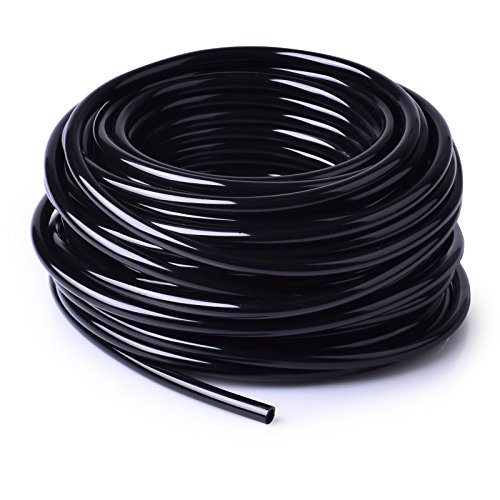
MIXC drip hose made by high quality. It can be left out year-round, buried or on the surface, in any weather.
Program a 30-Second Cycle That Cuts Refill Costs
Setting a 30-second cycle is your most effective strategy for cutting refill costs. This duration provides enough chemical to kill mosquitoes on contact while minimizing waste from longer bursts. Program short bursts at dawn, dusk, and late evening, which are peak mosquito activity times. This scheduling reduces unnecessary spraying and cuts chemical consumption. Aim for two to four cycles daily, adjusting the timer’s run time and rest intervals separately. Keep nozzle pressure low, around 100 PSI, to control flow rate and decrease output per cycle. Higher pressure causes more concentrate to waste. Choosing a 30-second cycle instead of 45 or 60 seconds can lead to noticeable refill savings over the season. For additional protection, consider adding a squirrel baffle to your bird table to prevent rodents from accessing the area. Offset your cycles by 30 minutes from sunrise and sunset to maximize impact with minimal waste.

Method of Application:Compressed air sprayer, ULV cold fogger, Power sprayer,Automatic misting system

LONG-LASTING PREMISE SPRAY: Use Sector Misting Concentrate mosquito insecticide to kill mosquitos and other bothersome flying insects.

Water based Permethrin approved for use in all MistAway Mosquito Misting Systems
Safety First: Pets, Kids, and Pesticide Compliance
Prioritize label compliance at all times. Using only products explicitly approved for outdoor residential misting systems is mandatory—ignoring these instructions isn’t just illegal, it puts your family’s health at risk. For pet safety, always remove animals from the treatment area during spraying and keep them away until surfaces dry. Schedule misting cycles when pets aren’t outside and never allow spray to contact them directly. Lock reservoirs and components to prevent children from accessing them. To avoid drift and residue exposure, use wind and motion sensors or delay spraying during windy conditions. Avoid spraying near water features, as many products can harm aquatic life. Regularly calibrate your system to prevent overspray on toys or furniture. Following label instructions for rates, timing, and placement ensures your DIY pest control is both effective and safe.