

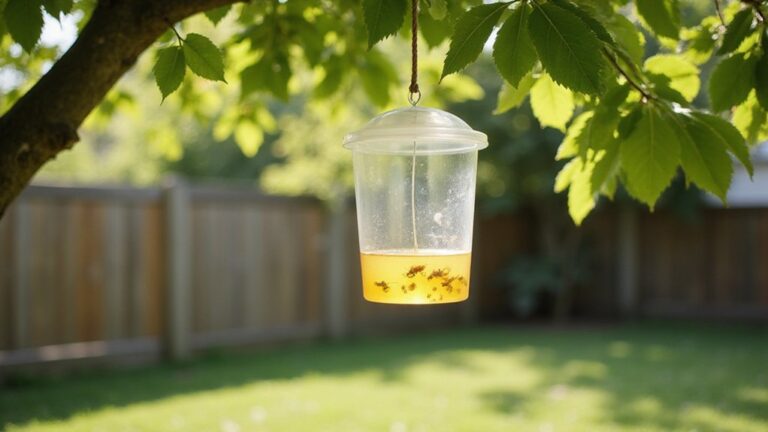
If you’re wondering whether wasp traps actually work, you’re not alone. They mainly catch foraging workers like yellowjackets, not queens or the entire nest, so they help reduce nuisance without eliminating the colony.
Typically, traps catch about 13 wasps a day, but results vary depending on bait and placement. Keep reading to see if traps are enough to solve your wasp problem.
What Exactly Do Wasp Traps Catch?
You mainly catch foraging workers—yellowjackets, hornets, and paper wasps—inside wasp traps. These insects are out searching for food, especially attracted to sweet or protein-based baits. When they crawl into the trap, they often cannot escape, leading to their capture. You won’t catch the queen or the brood, so the colony continues to produce more workers while you’re emptying the trap. The RESCUE! WHY Trap includes a dual-chambered design that uses three attractants to lure 19 different insect species. The type of bait you use has a larger impact on your catch than the trap’s design. Food odors are what draw wasps in, while the shape of the trap simply contains them. Unlike carpenter bee traps, which focus on physical trap design to target wood-boring pests, wasp traps rely heavily on chemical attractants. Color plays a minimal role; many traps use yellow to mimic flowers or natural cues, but it’s not a key factor. You’re unlikely to trap solitary species such as mud daubers or cicada killers because they aren’t attracted to the same scents. Therefore, your trap targets hungry foraging workers, not the entire colony itself. For larger predators, the placement strategy differs since traps must be sized and positioned for coyote capture rather than scent-based lure efficiency alone. For best results, choose protein-based baits like meat or fish during early spring to target wasp colonies when they seek protein for larval development.
How Many Wasps Can One Wasp Trap Really Capture?
Your wasp trap’s catch can vary widely—from just a few wasps per week to over 100—depending on factors like design, bait, and placement. Field studies show that hanging traps capture an average of 13.1 wasps per day, while ground traps tend to catch only about 2.5. Different bait types make a big difference; protein-based baits attract foragers seeking nourishment for larvae, whereas sugar-based baits lure those drawn to nectar sources. Matching your bait to what the wasps are currently after can significantly boost your catch. Trap effectiveness is constantly changing. You might see only six wasps in an hour, then seventeen the next, as local activity rises and falls. Even a trap that appears full often captures just a small fraction of the nearby population, especially near nests. Placement is critical—poorly positioned traps, even just inches from where wasps are flying, can result in few catches. Because of these variables, expect inconsistency. One trap might catch dozens weekly in a high-pressure yard, while capturing only a handful elsewhere. Ultimately, the goal of trapping is nuisance relief rather than total wasp removal—your results will fluctuate naturally. For water features, the principle of effective containment is similar, as pond netting options can help manage debris without harming aquatic life. To understand the varied strategies for pest control, consider how armadillo bait choices are also reviewed for effectiveness in different environments. Unlike some insect controls, traps are generally tested results showing minimal risk to non-target species when used as directed.

REFILL: Replacement lure to be used with Spectracide Wasp, Hornet, & Yellowjacket Trap. Each lure lasts up to 30 days.

Traps Multiple Species – Unsure if your problem is wasps, hornets, or yellowjackets? The RESCUE! WHY Trap attracts all of them, so you’ll never need to identify an insect. Simply hang outdoors and watch them pile up.

FOR RESCUE! YELLOWJACKET TRAPS – This refill cartridge provides 10 weeks of yellowjacket attracting power when used in the RESCUE! Reusable Yellowjacket Trap.
Why Traps Never Kill the Queen or Destroy the Nest
Traps never kill the queen or destroy the nest because they rely on capturing individual workers, not the entire colony. Effective queen targeting requires striking before the colony is established, typically in a narrow window when no workers or queens are present yet. Once workers are active, they block the trap’s access to the queen, making it impossible to eliminate her this way. Additionally, future queens often disperse and overwinter away from the nest, so traps targeting existing colonies won’t catch them in the process. Baffle placement on a tree trunk offers a comparable lesson, as it blocks climbing pests from reaching the canopy without addressing any hidden nesting sites above. Direct nest destruction or queen removal is necessary to eliminate the colony completely, but traps alone can’t access or destroy the colony structure. Without physically removing the queen or the nest, you’re only reducing visible activity temporarily, not solving the root problem. Unlike a bee suit which can block stings from wasps, traps cannot block the colony’s core survival mechanisms. In contrast, selecting the right heavy-duty wire for a physical barrier can effectively seal off entry points to prevent wasps from establishing nests in the first place.
Can a Wasp Trap Actually Make Your Infestation Worse?
While traps don’t actually increase the wasp population, they can make your infestation seem worse by drawing more foragers into your immediate area. A strong bait scent signals a food source, attracting wasps from neighboring properties based on their seasonal behavior and habitat preferences. If you place the trap too close to your door or patio, you’ll concentrate stinging insects right where you spend time, creating an alarming swarm effect.
You’re not creating more wasps, but you are redirecting traffic into your zone. Your trap then becomes a nuisance magnet rather than a control tool. The perceived increase in wasp numbers can make your situation seem worse, even though the overall colony count remains unchanged. Proper placement and scent management are crucial; placing traps strategically and controlling bait scent helps prevent attracting more wasps than necessary, reducing frustration and keeping the insects away from high-traffic areas. For voles, similar attractant principles apply, as castor oil repellents work by creating an unpleasant scent that drives pests away from treated areas.

QUICK-DROWN FORMULA: Designed to keep insects submerged for quick drowning.
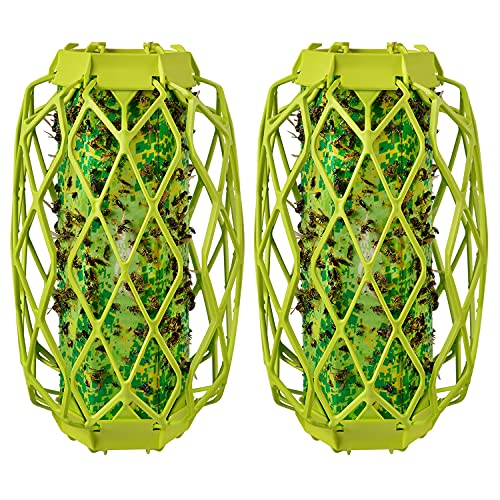
Eliminate Wasps – VisiLure Traps lure wasps, red wasps, mud daubers, and carpenter bees with appealing colors and a multi-dimensional pattern. Once attracted, they become stuck to the sticky surface and expire.
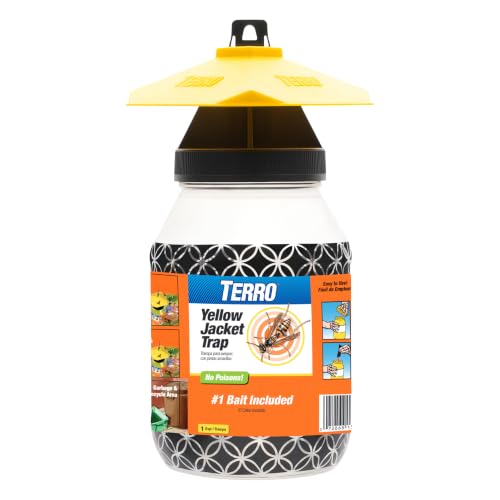
ATTRACT & KILL YELLOW JACKETS: Attracts and traps yellow jackets outdoors
What’s the Best Placement for a Wasp Trap?
The best placement for a wasp trap is on the yard’s perimeter, about 20 feet from patios or grills. Hang the traps at eye level, approximately 4 to 6 feet off the ground, to intercept seasonal swarms before they reach your gathering spots. Place traps between known nests or entry points and your yard, avoiding areas where people frequently gather. Positioning the traps in spots with morning sun and afternoon shade helps keep the bait fresh longer, attracting wasps more effectively. For indoor gnat problems, a similar principle applies when using apple cider vinegar as bait in a shallow dish covered with plastic wrap. Choose locations like fence lines or tree edges that allow easy access for checking and refilling the bait without disrupting your outdoor space. For trapping small pests like chipmunks, similar placement strategies near perimeter fences and activity zones improve capture success. Unlike bug bombs, which pose safety warnings due to flammable aerosols and chemical residues, wasp traps use simple attractants that are safer for use near people and pets.

Effective and Durable: There are double-entry tunnels on the trap, one on each side, increasing the chance of attracting more insects to the device. These nasty insects will be attracted by added sugar water and ultraviolet rays at night, producing an irresistible odor, they will be submerged in water or eventually dehydrated

Wasp Traps Outdoor Hanging, Disposable Yellow Jacket Trap, Carpenter Bee Killer Outside, Bug Catcher Bags

Wide Application: This wasp trap is highly versatile, effectively attracting not only wasps but also other flying insects such as flies, mosquitoes, and moths. Once lured, these insects become adhered to the sticky surface, ensuring their removal. It is well-suited for outdoor environments including gardens, courtyards, and campgrounds.
What Baits Work Best for Wasp Traps?
The best bait for wasp traps depends on the season. In spring and early summer, protein-based baits such as fresh fish, lunch meats, or canned sardine cat-food are most effective because wasps are feeding their larvae protein. These baits attract worker wasps that are provisioning the colony. Since protein scents diminish quickly in heat, you’ll need to replace the bait frequently to maintain its effectiveness. For example, cat food placed inside a DIY soda bottle trap can fill the trap in about an hour. To apply similar principles from trapping other pests, you should consider step-by-step setup techniques to ensure proper placement. This approach is comparable to using coyote decoys to draw in geese by leveraging natural predator-prey responses. For larger infestations, a more durable solution like bird netting for pigeons can physically block wasps from accessing nesting areas.
In late summer and fall, switch to sweet baits like fruit juice, sugar water, flat soda, jam, or overripe fruit. During this time, adult wasps seek carbohydrates. These sweet attractants draw in wasps looking for energy sources. Beer can also be very effective, especially for yellowjackets, as it mimics their preferred fermenting and sugary foods.
Always match your bait to the wasp species and season’s feeding habits. Use strong-smelling baits, refresh them regularly, and focus on options that best align with their current diet to improve your trapping results.

Long lasting: wasp traps outdoor hanging is suitable for seasons, our yellow jacket traps can work from spring through fall. Our hornet traps are designed to protect your home, garden, and farm for a long time in all weather and outdoor environments

Long lasting: wasp traps outdoor hanging is suitable for seasons, our yellow jacket traps can work from spring through fall. Our hornet traps are designed to protect your home, garden, and farm for a long time in all weather and outdoor environments

FOR RESCUE! WHY TRAP - This refill works with the RESCUE! WHY Non-Toxic Reusable Trap for Wasp, Hornet and Yellowjackets, and provides 2 weeks of attractant power.
When Should You Set Wasp Traps for Maximum Effectiveness?
Set wasp traps during a 30- to 45-day window in early spring, before queens establish nests, to effectively prevent colonies from forming. The ideal time to deploy traps is when temperatures stay around 55°F for several days, indicating queen emergence. This period varies with your local climate—warmer regions may see this window earlier—so don’t rely solely on calendar dates. Instead, monitor local weather patterns and soil temperatures to pinpoint the right moment. Before handling any trap or bait, always wear protective gear and follow safe opening procedures to avoid accidental stings or bites. Understanding how yellow jacket traps work involves knowing that they rely on a specific attractant to lure foraging insects away from human activity. For a durable outdoor setup, it is helpful to follow the same mechanical principles used for proper spacing and fixings when securing trap supports.
Continue keeping traps active throughout summer and fall to target foraging workers. Peak activity occurs from late summer into early fall, aligning with the height of colony foraging. Regular maintenance is key: refresh traps frequently and leave them in place until wasp activity ends, typically by October or November. Proper identification of wasps versus beneficial insects ensures your efforts are focused correctly, preventing unnecessary pesticide use. Starting early and maintaining consistent coverage throughout the season is essential for maximum control.
What Wasp Traps Can’t Do (and When They Fail)
Wasp traps cannot eliminate an active nest because they only catch adult foragers and do nothing to stop the queen from reproducing. Mature colonies, such as yellowjacket nests, may have thousands of workers, which means your trap might catch some wasps but will leave the colony largely intact. This approach only targets the adult insects venturing out for food but doesn’t affect the brood or the reproductive queen. As a result, the nest continues to grow despite traps catching individual wasps. However, in contrast, bug zappers specifically designed for mosquitoes work by electrocuting flying insects attracted to ultraviolet light, but they also fail to address breeding sites or eliminate the root of a mosquito problem. Additionally, bait in traps can attract wasps from outside your yard, increasing local activity rather than reducing it. This can lead to more wasps in your vicinity, possibly prompting you to use stronger chemical controls. However, these chemicals often raise environmental concerns and can harm beneficial insects like bees and parasitic wasps. If you rely solely on traps, especially if the colony is large or the bait is ineffective, you won’t make much impact on the overall wasp population.
When Should You Just Call an Exterminator?
You should call an exterminator when a nest is hidden inside wall cavities, attics, or soffits. These spaces are difficult to access safely and completely eliminate pests without professional equipment and expertise. If wasps are building nests near doorways, grills, or play areas, the risk of stings increases and safety is compromised for anyone nearby. Large colonies or aggressive swarming around frequently used areas also indicate that professional intervention is needed. Additionally, if you or household members have known sting allergies, or if you have children or pets, attempting DIY removal can be dangerous. Failed DIY treatments where insects continue to forage or traffic through the area suggest a larger, hidden colony that needs professional removal. Ultimately, professional exterminators provide thorough elimination, especially for recurring infestations or nests that are difficult to reach from the ground.
How Do You Empty a Wasp Trap Safely Without Getting Stung?
To empty a wasp trap safely without getting stung, perform the task early in the morning when wasps are less active and sluggish. Confirm that all trapped insects are dead before opening the trap, as dead wasps can still sting if disturbed. Avoid crushing them inside the trap to prevent releasing alarm pheromones that draw others.
Carefully move the trap away from your house and place it on a flat surface. Wear protective gloves to shield your hands from possible stings. Open the trap slowly and only after it’s secure on a stable surface. Dispose of dead wasps into a sealed bin—never leave them exposed to the environment. If your trap is reusable, rinse it thoroughly with water and allow it to dry completely before reuse. For disposable traps, close it securely before discarding it according to local waste disposal regulations. Always keep bait and empty traps out of reach of children and pets to maintain safety.