


Thinking about using wasp spray indoors? It’s a tempting quick fix, but the truth is, most products aren’t safe for indoor use unless the label says so.
Using the wrong spray can lead to serious health risks like breathing problems, seizures, or poisoning.
Often, safer options like vacuuming or soapy water can do the trick, but sometimes chemical spray is the only answer.
Keep reading to learn when it’s safe and how to use it properly.
Can You Use Wasp Spray Indoors?
No, you should never use wasp spray indoors unless the label explicitly states it is safe for indoor use. Many insecticide products are labeled for outdoor or non-living spaces like attics, garages, or sheds only. Some sprays are designed specifically for indoor use, but others clearly indicate “never use indoors” or “outdoor use only.” Using a product outside its intended application site violates federal regulations and can pose health risks to you and your family. Always carefully read the label and follow its instructions—using a spray where it’s not approved can cause injuries, allergic reactions, or accidental poisoning. Remember, the label’s directions are based on safety testing and regulations; ignoring them turns effective pest control into a potential hazard. Unlike wasp sprays, bee suits are proven to shield you from stinging insects outdoors when used correctly, but they are not a solution for indoor infestations.
Health Risks of Indoor Wasp Spray Use
Using wasp spray indoors can pose serious health risks. In enclosed spaces, aerosol drift you inhale can irritate your throat and airways, leading to coughing, sneezing, or shortness of breath. In more severe cases, neurologic effects like muscle twitching, convulsions, or loss of consciousness can occur. Eye contact with spray burns, reddens, and tears your eyes, and a 15-minute water flush may be necessary to minimize damage. Skin contact often causes itching and irritation due to pyrethroids, common in wasp sprays. Poor ventilation traps the chemicals inside, increasing your exposure and negatively impacting your home’s air quality. Repeated use amplifies risks such as headaches, nausea, and fatigue. If you have asthma, your symptoms are likely to worsen with indoor spray use. Overall, using wasp spray indoors is a significant health hazard that can affect everyone nearby. Additionally, these sprays kill bees if they drift into outdoor areas where bees forage, making them an even worse choice for controlling pests near your home. Some homeowners mistakenly try coyote urine as a pest deterrent, but it is designed for mammals and ineffective against wasps. For those seeking a safer alternative for outdoor pest control, live animal traps offer a non-toxic solution for removing larger animals like coyotes.

Two 14 oz cans of Raid Wasp & Hornet Killer Spray kill flying, stinging bugs on contact, including paper wasps, yellow jackets, mud daubers, bald-face hornets, and more

PT Wasp-Freeze II Wasp & Hornet Insecticide provides instant knockdown for effective pest control including Yellowjackets, Black Widow and Brown Recluse spiders

What the Label Says (And Why You Must Read It)
Before you unscrew the cap, the label is your only legal and practical guide. Wasps sprays aren’t one uniform category, so what works for one brand might be outright forbidden for another. Following the label’s directions, known as label legality, is essential because some labels explicitly say “Never use indoors” or “For outdoor use only,” making indoor application a clear violation. This isn’t just about legality—if you ignore these instructions, your safety and effectiveness diminish. For instance, just as pond netting is specifically designed for outdoor water features, most wasp sprays are formulated for exterior use and should not be assumed safe indoors. Similarly, reviewing top bee traps for carpenter bees highlights how targeted tools are designed for specific settings, reinforcing that a product’s intended environment must always be respected.
For safety compliance, pay attention to the specific limits specified on the label. Indoor use is often restricted to treating nests, cracks, or crevices and does not permit broad room spraying. You should remove pets, cover food and utensils, and ventilate the space afterward. Never assume indoor use is permitted without checking the label—always read first. When indoor application is allowed, it’s typically narrow in scope and specifically tied to pest hiding spots rather than general spraying throughout a room. Your safety depends on following these precise instructions.
Safer Indoor Alternatives for Wasp Control
If a wasp is indoors and spray labels forbid indoor use, safer methods can still resolve the issue without chemicals. Start by opening windows and turning off indoor lights to encourage the wasp to leave naturally. For wasps that have landed, use non-toxic approaches like trapping it under a cup and sliding a card underneath or sucking it up with a vacuum hose. A simple homemade spray of soap and water, mixed with one tablespoon of dish soap in two cups of water, can also be effective—just spray directly on the wasp, avoiding food and flames. To prevent future invasions, seal gaps around windows and doors, repair or replace torn screens, and promptly clean up sweet spills or residue that may attract wasps. For persistent outdoor infestations, consider using a top gopher trap as a physical barrier to block burrows near your home. These methods keep you safe while avoiding indoor chemical exposure. Just as with skunk trapping, always prioritize avoiding sudden movements and protective gear when dealing with a trapped or cornered pest. Installing bird spikes for roofs can also discourage wasps from nesting on ledges or eaves near your home.

Raid Max Foaming Wasp & Hornet Killers fast coverage foam kills the entire wasp nest

The information below is per-pack only

KILLS ON CONTACT: Hot Shot Wasp & Hornet Killer controls wasps, hornets, yellow jackets, scorpions, mud daubers and tent caterpillars.
What to Do If You Already Sprayed Wasp Spray Indoors
If you have already sprayed wasp spray indoors, you should leave the room immediately and wait until it is properly aired out before re-entering. Open windows and doors to allow fresh air to flow in and push contaminated air outside. Use fans to accelerate this process. Wait at least 15 minutes or until the product’s recommended re-entry time has passed. Inside, the spray can react with surfaces, causing lingering odors that may be stubborn to remove. Sweep up dead insects only after you are certain the area is safe and adequately ventilated. If your skin or eyes were exposed during spraying, rinse immediately with soap and water. Monitor for symptoms such as headache, dizziness, coughing, or throat irritation, which are common reactions to pyrethroids. If these symptoms persist or worsen, contact Poison Control at 1-800-222-1222. For serious issues like trouble breathing, chest tightness, or confusion, seek urgent medical help. Always bring the can of spray with you when seeking medical assistance so healthcare providers can identify the active ingredient involved.
Why Professional Pest Control Is Often the Smarter Choice
Professional pest control is often the smarter choice because it provides a safer and more comprehensive solution for indoor wasp problems. When a technician targets the nest directly, they use specialized dusts designed to reach the queen and the core of the wasp colony, reducing the risk of repeat visits. This targeted approach respects insect behavior by identifying the species and the entry point, which helps prevent wasps from chewing inward if exits are blocked too early.
Additionally, professional treatments minimize environmental impact by applying precise, minimal amounts of chemicals rather than broad aerosol sprays. With appropriate protective gear and careful timing, pest control experts eliminate the nest effectively, addressing the source of the problem instead of just scattered foragers. This process also reduces sting risk and prevents indoor sightings from recurring. Furthermore, professionals inspect the property for gaps and cracks that allow wasps inside, offering long-term prevention and reducing the chances of dangerous stings during peak season.

POWERFUL BROAD-SPECTRUM CONTROL: Tirade 1% Dust contains cyfluthrin, the same active ingredient as the leading brand, to control flying, crawling, and wood-infesting insect pests.

WATERPROOF INSECTICIDE DUST – Moisture-resistant bug dust that will not clump in damp areas. This waterproof insecticide dust is ideal for cracks, crevices, wall voids, and other locations where sprays break down.

Large-Capacity Design: This powder duster has a large dust distribution capacity and its wide bulb container minimizes filling times
Using Wasp Spray in Attics, Garages, and Sheds
Wasp spray use in attics, garages, and sheds depends entirely on the product label. Many labels allow limited use in these spaces, but only for opening nests or treating cracks. Never spray broadly or try to fog these areas unless the label explicitly states it is safe to do so. Always check the label carefully—some products prohibit any indoor use, even in garages attached to your home. Using a product like mosquito bits for standing water provides a far safer, non-chemical option for controlling larvae in damp areas near the home. A safer alternative for outdoor treatment is to use a bleach spray only on wasps already trapped in a sealed container, as it is not a reliable flying insect killer. For dogs that dig near sheds or garages, installing sturdy chicken wire can prevent them from accessing treated areas while the spray dries. When applying spray yourself, take proper precautions. Wear gloves to protect your skin and avoid standing directly under the nest to minimize exposure. Ensure the area is well-ventilated after spraying to allow fumes to dissipate. If you spray in an attached garage, be aware that residue can drift into living spaces, so keep children and pets out until the area has thoroughly aired out. Follow the re-entry time specified on the label, which typically ranges from 15 to 60 minutes, to avoid inhaling harmful vapors.

100% SAFE & NATURAL- Cinnamon and Peppermint oil spray for Most kinds of everyday Bees and Wasps. This Bee Repellent Spray is made up of natural peppermint & Cinnamon Essential oil ingredients found in nature. Safe to use around Children, nursing mothers, kitchens with food out. Helps reduce the quantity of- Bees and Wasps. Indoor and outdoor use. Respray after a rainstorm.

Mosquito spray that also kills hornets, wasps, yellow jackets, boxelder bugs, non-biting gnats

LONG-LASTING PROTECTION: This bug spray for homes kills listed bugs and protects your home for 365 days against ants, roaches and spiders indoors on nonporous surfaces
When Is Wasp Spray the Only Choice?
Wasp spray is the only viable indoor pest control option when a stinging insect is actively attacking inside your living space and immediate action is necessary. In such urgent situations, you may not have the luxury of time to gather multiple tools or wait for professional help. Make sure to use a product that is specifically labeled for indoor use, as outdoor-only sprays are illegal for indoor applications and can pose health risks to inhabitants. Apply the spray at dusk or early morning, when the insects are less active and less likely to sting reflexively. Stand at a safe distance from the nest and aim directly at it for maximum effectiveness. Vacate the area immediately after applying the spray and ventilate thoroughly according to label instructions to remove residual chemicals. Keep people and pets away until the treated area is completely dry to ensure safety. However, unlike natural predator urine options that are tested for safety, chemical sprays require careful ventilation. For a physical barrier approach, consider mesh netting options for garden protection to prevent pests from entering the home. For controlling different indoor pests like fungus gnats, you might consider mosquito bits as a safer alternative for larvae control. Remember, this should be considered a last-resort tactic and not a regular pest control method; follow up with professional assistance if the nest remains active.
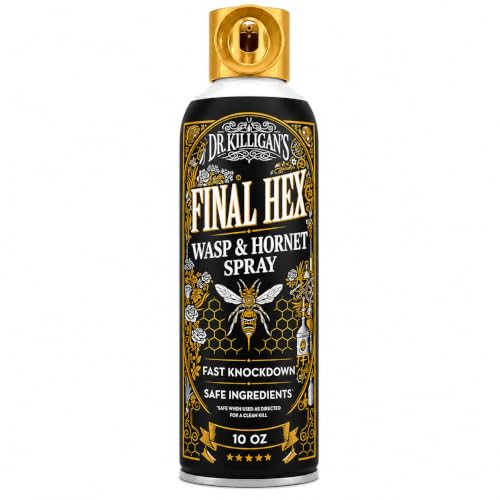
Protect Your Home, Deck, and Backyard: Final Hex is a fast acting, alcohol-based aerosol that knocks down and kills stinging insects, including paper wasps, hornets, yellowjackets, and mud daubers.

Bug fog seeks out roaches and fleas in hard-to-reach areas

BEST VALUE REFILLABLE COMBO KIT — 10oz READY-TO-USE CONTINUOUS SPRAY + 4oz CONCENTRATE – Get the best of both worlds in one bundle. Start with the 10oz pre-mixed continuous sprayer for instant pest protection, then refill it again and again using the 4oz concentrate — one bottle makes a half gallon, up to 6 full 10oz refills.