

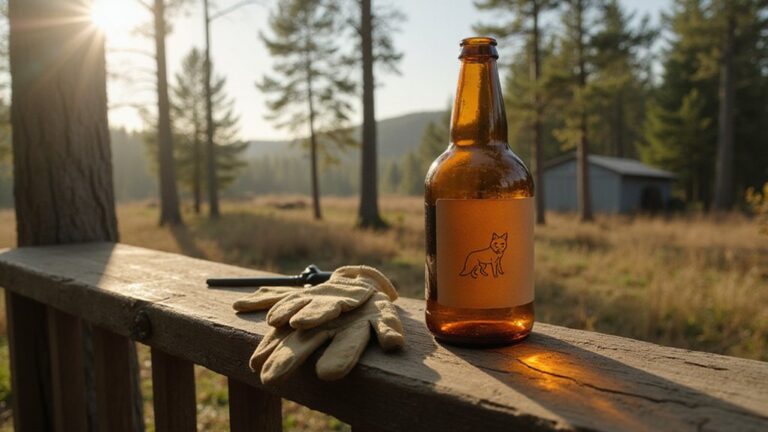
Wondering if coyote urine will lure coyotes closer to you or keep them at bay? The answer isn’t straightforward. It mainly signals territory rather than acting as a reliable attractant or repellent. While fresh urine might temporarily discourage or prompt curiosity, there are more effective methods you should consider.
Keep reading to learn what really works.
Does Coyote Urine Attract or Repel Them? The Short Answer
Coyote urine generally does not attract them; instead, it acts as a deterrent. Its primary purpose is territorial signaling—coyotes use urine to mark boundaries and communicate dominance. The scent signals to other coyotes that the area is already claimed, prompting them to avoid it. This makes it unlikely to draw coyotes in like food or bait would. However, animals driven by scent curiosity might sniff unfamiliar urine out of instinct to assess potential threats. This quick investigation usually happens only once and doesn’t lead to lingering or attraction. Most coyotes will quickly determine that the scent is not food and then move away. Overall, coyote urine is designed to repel rather than attract—they interpret it as a warning, not an invitation. Unlike a protective garment tested for warding off wasps, urine serves a chemical rather than physical barrier role. Similarly, if you are covering a pond to keep debris out, best pond netting provides a physical barrier that urine cannot. Just as wasp spray can be harmful to cats if ingested or contacted, coyote urine should be kept away from pets to avoid accidental poisoning.
Why Homeowners Spray Coyote Urine (The Repellent Claim)
Why would a homeowner spray coyote urine around their property? The main reason is to create a barrier that deters nuisance wildlife like deer, rabbits, raccoons, and others from approaching your garden, flower beds, or chicken coops. The repellent works on predator-scent logic: prey animals smell the coyote urine, interpret it as the presence of a predator, and instinctively avoid the area to stay safe. For trapping purposes, this same logic can be inverted by using effective groundhog trap baiting to lure pests instead of repelling them.
To use it effectively, you should apply the urine along fence lines, mulch beds, and points of entry. This creates a “pee-rimeter” that signals danger and discourages animals from crossing into your space. The spray is marketed as a humane and chemical-free method, working primarily through scent masking. It is supposed to override other attractants and simulate an active predator’s presence nearby. This same logic can also serve as a coyote bait for attracting coyotes into traps during hunting or trapping activities. For homeowners seeking a similarly focused solution, selecting the right bee trap for carpenter bees can prevent structural damage just as effectively as predator urine deters wildlife.
Many homeowners enhance the effect by pairing coyote urine with motion-activated lights or sound devices, creating an environment that wildlife perceives as high-risk. This combination helps reinforce the deterrent without harming animals.
Since the scent decays quickly, reapplication is necessary every 7 to 10 days or after heavy rain. The urinary spray’s effectiveness is temporary, meaning regular upkeep is essential to maintain the wildlife barrier.

Expanded Scent Coverage: Includes 16 oz of 100% coyote urine and 10 ScentTags to help establish a scent perimeter across larger outdoor areas.

100% FULL STRENGTH - 100% coyote urine predator pee

MARK YOUR TERRITORY: Tired of unwanted visitors? Coyote urine simulates the presence of a real predator in the area.
What Science Says About Coyotes and Their Own Urine
Coyote urine primarily functions as a territorial marker and a tool for social communication rather than an attractant. It signals boundaries and conveys identity cues such as sex and social status. Coyotes respond differently to urine scents from themselves, their siblings, or strangers, meaning that a random urine pile won’t automatically attract them. This is similar to how attaching hardware cloth to wood requires careful selection of fasteners like staples or screws to ensure a secure and long-lasting barrier. When choosing materials for a garden barrier, selecting the right gauge ensures the wire is strong enough to withstand outdoor conditions and animal pressure. You can reinforce the barrier using simple tips like checking for proper tension and overlap to extend its durability.
Research shows that marking activity increases near territorial edges and intrusion points, indicating that scent marks serve to defend boundaries rather than lure coyotes. These scent signals help coyotes orient themselves spatially and establish ownership over a territory. They do not act as a universal lure to bring coyotes closer; instead, the social context and familiarity influence their response. Therefore, using urine alone as a coyote attractant is unlikely to be effective; understanding their social behavior offers better insight into their responses to scent marks.
The Scent Compound That Makes Coyote Urine Lure Coyotes
The compounds that make coyote urine highly attractive are a combination of sulfur compounds and acids. Researchers have identified that trimethylammonium decanoate (TMAD), a synthetic salt, outperforms other compounds like trimethylammonium valerate (TMAV) by 4.2 times in lure tests. TMAD’s effectiveness highlights the importance of specific chemical interactions, especially involving trimethylamine (TMA) paired with fatty acids. For those dealing with roach problems, similar principles of chemical attraction apply to Top Bug Bombs for Roaches that use scent-based lures to draw pests into traps. Similarly, homeowners concerned with vent blockages can use bird guards on dryer vents to prevent animal intrusion while maintaining efficient airflow. For those seeking to protect their bird feeders, installing a squirrel baffle can be an effective way to deter persistent pests.
In addition to these, volatile sulfides such as methyl 3-methylbut-3-enyl sulfide are prominent in estrous urine and play a significant role in attracting coyotes. Aldehydes like nonanal and decanal are also key components, prompting behaviors like sniffing and rub-rolling. It’s not just a single molecule that works but a complex, multi-compound scent signal where sulfur compounds and acids provide the primary attraction. This layered scent profile demonstrates why using multiple chemical cues enhances lure effectiveness in attracting coyotes.
Why Coyote Urine Works or Backfires (Context Matters)
Whether coyote urine works or backfires depends heavily on context, because the scent functions as a social signal animals interpret based on factors like territory, season, and weather conditions. Your familiarity with the habitat is critical: on an active territory boundary, fresh urine signals “trespasser,” often prompting coyotes to avoid or confront it. In contrast, in areas with low activity, the same scent may be ignored or seen as a threat rather than a boundary marker. The age of the urine also affects its effectiveness. Fresh urine indicates a current rival, while older, degraded urine loses its communicative strength and is often disregarded. This is similar to how live traps for groundhogs rely on proper placement and bait freshness to be effective.
Weather influences scent decay, making it less reliable over time. Rain, wind, and temperature fluctuations accelerate the breakdown of the urine’s olfactory cues. Additionally, food availability plays a dominant role; if food is plentiful nearby, the scent transforms from a border indicator to a marker of resource presence. Outside the breeding season, female urine is less likely to attract males, and repeatedly applying urine in the same spots without change can teach coyotes that there’s no real threat, reducing its effectiveness or even backfiring altogether.

PredatorPee Wolf Urine creates the illusion that a wolf is nearby

100 PERCENT NATURAL COYOTE URINE: Strong, authentic urine sourced from real coyotes for real effectiveness
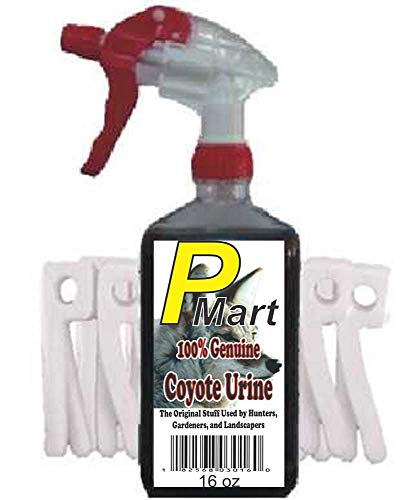
Coyote Urine 16 oz E-Z Trigger Spray!
Proven Deterrents That Beat Coyote Urine Every Time
Passive scent-based repellents like coyote urine are often ineffective because coyotes quickly habituate to them. Instead, physical barriers and active deterrents provide reliable protection. Exclusion fencing at least 48 inches high with a buried apron prevents digging under. Woven wire fencing is durable and hard for coyotes to breach. Electric fencing, especially multi-wire or electronet designs, delivers a shock that discourages challenge without requiring constant monitoring. If your electric fence stops working, check the power source and wiring for common issues like a dead battery or broken connections, following troubleshooting steps similar to those for pump sprayers. Hazing techniques—yelling, waving your arms, throwing small objects, and using noisemakers—work best when used actively and rotated regularly to prevent habituation. Removing attractants such as pet food and trash reduces coyote interest and the likelihood of encounters. Limiting cover near your home minimizes hiding spots and makes the area less attractive. Combining fencing, electric barriers, and hazing creates layered defenses that effectively deter coyotes beyond scent-based methods. Passive repellents are passive for a reason; active, physical solutions are more dependable. For similar pest control, using a liquid bait in a properly placed trap can safely capture fruit flies without relying on ineffective scents. Note that, unlike some pest products, bug bombs pose serious toxicity risks to pets if used indoors.

Dog Fence for Yard --- Each panel of the dog fence measures 48" H x 29" W, can be connected and expanded into different shapes based on your specific needs. Comes with a lock and the flexibility to choose whether or not you want to install a gate. Upgraded to 48-inch heightening design to prevent large dogs from entering the garden.

【Low-Maintenance & Rust-Resistant No Dig Fence】Say goodbye to rotting, warping, or fading wooden fences! Our no dig dog fence outdoor is crafted from heavy-duty wrought iron with a protective coating, delivering superior rust resistance that resists corrosion, fading, and harsh weather—designed for long-lasting outdoor use with minimal upkeep. These metal no dig fence panels serve as a reliable animal barrier fence, perfect for yard fences, garden borders, patio fences, or poolside fences to keep pets safe and unwanted animals out

Maximum Height for Security & Privacy - At 48 inches tall, this fence offers the ultimate solution for containing large and jumping dogs, creating a private outdoor space, and securely enclosing pools or hot tub areas.