

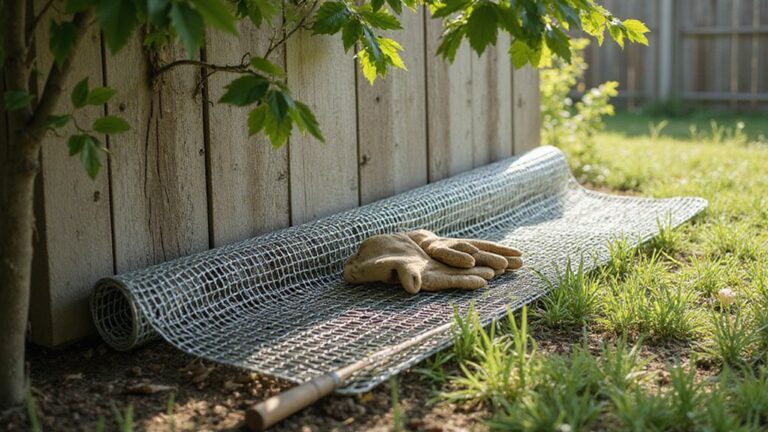
If you’re wondering what hardware cloth really is and why it might be the right choice for your fencing or enclosure needs, you’re in the right place. It’s a sturdy wire mesh made from galvanized or stainless steel that offers much more strength than chicken wire.
In this article, you’ll learn how to choose the right gauge and finish to make sure your project stays secure and rust-free.
Keep reading to get the full details.
What Is Hardware Cloth and How Is It Made?
Hardware cloth is a thin, flexible metal mesh made from welded or woven wire. Typically constructed from galvanized steel, it can also be found in stainless steel or PVC-coated variants. Manufacturers start with low-carbon or hard-drawn wire, then shape it into a square or rectangular grid. Most hardware cloth is welded, creating strong, rigid joints and consistent openings. Some versions use wire weaving instead, which can produce decorative patterns but may be less sturdy. After forming, a zinc coating is applied—hot-dip galvanizing after welding offers the best protection at the weld points. Common mesh openings range from 1/8 inch for insect exclusion to 1 inch for small-animal fencing. For targeting wood-boring pests specifically, hardware cloth can be used in top bee traps to create an effective physical barrier. The finished product is a rust-resistant mesh, ideal for garden fences, chicken coops, and protective screens. Unlike unreliable scent deterrents such as coyote urine, hardware cloth provides a physical barrier that effectively excludes rabbits from garden areas. Regular upkeep, such as cleaning off debris and checking for rust spots, is part of proper maintenance that extends the life of the material.
Hardware Cloth vs. Chicken Wire: Which Is Stronger?
Hardware cloth costs more upfront—typically $0.50 to $1.50 per foot, depending on gauge and size—but it offers superior durability. It resists sagging and rusting over time, making it a reliable long-term barrier. Chicken wire is usually cheaper at around $0.10 to $0.25 per foot, but it’s too flimsy for serious security and can be easily bent or chewed through by raccoons or weasels. For homeowners wondering about pest control, note that coyote urine is another method some try, but it generally fails to repel skunks effectively. While the initial investment for hardware cloth is higher, its strength and longevity justify the cost if you need a secure enclosure. If wasps are a concern, however, a bee suit may offer inadequate protection—bee suits are not designed to shield you from wasp stings. Chicken wire might save your budget initially, but you’ll likely need to replace or reinforce it sooner, especially if pests or animals are determined. For long-term protection and peace of mind, hardware cloth’s toughness justifies the higher price. Unlike chicken wire, galvanized hardware cloth is specifically treated with a zinc coating to resist rust and withstand outdoor moisture.

Galvanized After Welding: Hot-dip galvanized after welding coats every welded joint, so the heavy duty mesh resists rust and breakage far longer than pre-galvanized wire in rain, soil, and sun.Thicker wire builds a sturdier fence that resists bending and animal push-through

ATTENTION: Please Read: Our hardware cloth is 20 feet long, 4 inches wide, wire 23 gauge thick and holes 1/4 inch. Please confirm the size before placing the order

Built to Last: Crafted with professional welding, our hardware cloth features reliable welded joints that eliminate wire breakage. Heavy-duty galvanized steel wire with a double-layer ethylene coating and premium powder coating, ensures rust and corrosion resistance, significantly extending its lifespan.
What Hardware Cloth Size Blocks Rodents, Snakes, and Small Predators?
A 1/4-inch hardware cloth is the best choice for blocking rodents, snakes, and small predators. This size prevents tiny mice from squeezing through, ensuring complete protection. Smaller pests like juvenile snakes and baby rodents can easily slip through larger openings, so anything larger than 1/4 inch is not secure enough. When pest exclusion is a priority, match your mesh size to the smallest threat you face. The 1/4-inch hardware cloth is considered the gold standard because it effectively keeps out a wide range of pests without gaps. Using this size simplifies your barrier because it handles rodents, reptiles, and small predators all at once. For a similarly reliable exclusion solution, consider carpenter bee traps if you need to protect wooden structures from drilling insects. For confidence in your pest-proofing efforts, opt for 1/4-inch hardware cloth. For indoor fruit fly problems, you should also consider top fruit fly traps to keep your home completely free of unwanted bugs.
Where to Use Hardware Cloth for Gardening and Animal Enclosures
Hardware cloth is highly versatile in gardening and animal enclosures. You can line raised beds with it to prevent burrowing pests from entering while still allowing for proper drainage—this not only keeps pests out but also helps protect roots from damage and facilitates soil amendments. Extending hardware cloth beyond bed edges creates a barrier that reduces tunneling entry points for gophers and voles.
Use it around garden perimeters to reinforce fencing, deterring rabbits and squirrels from squeezing through gaps. Wrapping young tree trunks with hardware cloth cylinders offers protection against rodents that gnaw on bark, especially on the vulnerable cambium layer. For animal enclosures, build chicken coops, rabbit hutches, and aviaries using hardware cloth for superior predator resistance compared to traditional chicken wire, thanks to its rigid structure. Additionally, shape it into trellises for climbing vegetables, or utilize it as a screen for compost bins or soil sifting to keep debris or pests at bay. For bird tables, adding a squirrel baffle can further prevent rodents from accessing feeders. For persistent fly issues near animal enclosures, a dedicated horse fly trap can be an effective supplement. For cockroach problems, however, wasp spray has limitations and is not recommended as a targeted solution.

Built to Last: Crafted with professional welding, our hardware cloth features reliable welded joints that eliminate wire breakage. Heavy-duty galvanized steel wire with a double-layer ethylene coating and premium powder coating, ensures rust and corrosion resistance, significantly extending its lifespan.

High quality raw materials: Our hardware cloth chooses the strength, toughness and ductility of low carbon steel wire as the inner core. This determines the basis of the high quality of our products

⭐【FEATURES 1】Half inch hardware cloth is made of black annealed steel wire material, galvanized again after welding, Anti-corrosion and anti-rust. Carton packaging and transportation can ensure that the galvanized mesh is delivered to you in good condition.
Which Hardware Cloth Gauge and Finish Is Best for Your Project?
Lower gauges like 16 or 19 are best for projects requiring maximum strength because they are thicker and more rigid. These gauges offer the durability needed for heavy-duty applications such as animal enclosures or structural reinforcement. Higher gauges, like 22 or 24, are thinner and more flexible, making them easier to shape and install in projects that demand more maneuverability, like small animal cages or fencing for garden beds. Your choice depends on the balance between strength and ease of handling needed for your specific project. For applications involving larger pests, selecting the best netting for deer can similarly require thicker materials to withstand impact. For tough yard barriers, 19 gauge hardware cloth provides an excellent balance of rigidity and manageable installation.
Finish durability is crucial when selecting hardware cloth. Galvanized steel provides good corrosion resistance at an affordable price, making it suitable for most outdoor uses. However, for environments with frequent exposure to moisture or harsh weather, stainless steel offers superior rust prevention and longevity. If longevity outweighs initial cost considerations, stainless steel is the better option. Both finishes vary in their corrosion resistance levels and cost, so consider your environment and budget when choosing. For less demanding tasks, you can even repurpose materials like a fruit fly trap to test simple barriers against small pests.
It is essential to consider the interplay of gauge, finish, mesh size, and roll dimensions. Matching each factor to your project’s specific needs ensures the best results. A delicate balance between these elements helps optimize performance, durability, and ease of installation.
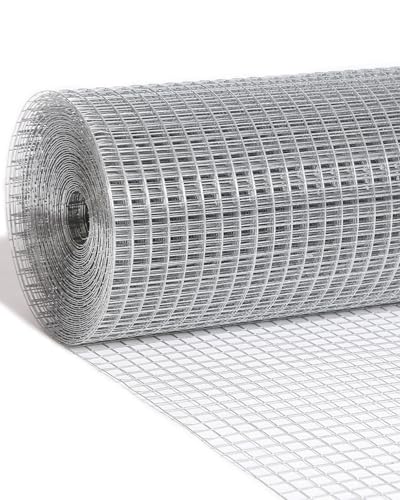
Premium Galvanized Construction – Made with 1/2 inch x 1/2 inch mesh, 48 inches x 100 feet (1.22m x 30.5m), from galvanized annealed steel wire. The wire mesh is double-galvanized after welding, offering exceptional corrosion and rust resistance. It’s securely packed in a durable carton to ensure no torn edges and to keep the product in perfect condition during shipping

Material and size: The size of the hardware cloth is 16 inch×50 ft and 1/2 inch×1/2 inch thickness, adopt 19 guage hot-dipped galvanized material

【OUTSTANDING RUST RESISTANCE 】 The 2′×50′ hardware cloth is made of No. 19 heavy-duty galvanized steel wire and provides double coating to maximize rust resistance and service life. Vinyl coating provides additional protection. Can be easily cut with scissors. Molded or folded as needed without any problems