


Are ultrasonic squirrel repellers a waste of money? Many people buy them hoping to keep squirrels away, only to find they stop working after just a few nights.
These devices emit high-pitched sounds meant to scare squirrels, but they quickly become accustomed.
If you want real solutions, it helps to understand what actually works.
Keep reading, and you’ll learn what’s effective in keeping squirrels out of your space.
What Ultrasonic Repellers Actually Do (Spoiler: Not Much)
Ultrasonic repellers do not effectively repel squirrels from your yard. While they emit high-frequency sound waves that can briefly startle an animal, only about 20% to 30% of rodents react to these sounds. Moreover, the response typically fades within a week of repeated exposure, as the animals become accustomed to the noise. Field studies also indicate there is no significant decrease in squirrel populations when these devices are used over time. Instead, a squirrel baffle mounted on a pole provides a proven physical barrier that stops squirrels from climbing. In contrast, choosing best fence posts provides a far more reliable structural barrier for enclosing areas against pests. For indoor pest control, you still need to unplug your refrigerator before using bug bombs to avoid fire hazards from sparking appliances.
These devices are not reliable for pest control safety either. They do not prevent squirrels from feeding, nesting, or reproducing. The sound waves do not travel well around obstacles like trees or structures, and laboratory results often do not match outdoor conditions. Consumer-grade ultrasonic repellers lack the power needed to create lasting avoidance behavior, making them ineffective tools for managing squirrel activity. In essence, while these devices produce noise, they do little to keep squirrels away in the long run.

【SUPERIOR SQUIRREL PROTECTION】: This 19-inch conical baffle forms a climb-proof barrier that effortlessly deters squirrels. Its slick, non-grip surface denies any foothold, ensuring your birdseed stays secure and your feeders remain impeccably clean.

【SQUIRREL PROOF BIRD FEEDER POLE】Protect bird seed from squirrels with the large 19" cone squirrel baffle. The smooth surface helps block squirrels from climbing to feeders, reducing stolen seed and helping keep feeding areas cleaner. A great choice for bird lovers looking for a squirrel proof bird feeder pole for outdoor use.

STURDY DESIGN: Our pole kit provides solid prongs base to support bird feeders, house. The metal powder-coated so it will not rust easily. The diameter of pole is 0.9 inch. The pole height is 80 inch (6 feet tall). The bird house is not included in the package
Why Squirrels Tune Out Ultrasonic Repellers Quickly
The reason squirrels tune out ultrasonic repellers so quickly is because their initial startle response diminishes rapidly. When they first hear the high-frequency sound, they react with avoidance, but this reaction fades within just a few nights. The sound lacks any real threat, so their brains begin to filter it out as background noise. Sensory fatigue kicks in within days, and their neural pathways learn that the noise doesn’t signify danger. As a result, the signal loses its importance, and the squirrels resume normal activity. Studies indicate a 71% effectiveness on the first night, but habituation usually occurs after about 3.6 nights. Within a week, the repeller’s sound becomes simply an unnoticed part of the environment, rendering it ineffective as a deterrent. For comparison, a welded wire chicken run provides a permanent physical barrier that avoids this problem entirely. For homeowners who also protect their water features, choosing the best netting can provide a physical barrier that ultrasonic devices cannot match. Unlike squirrels, carpenter bees are best deterred by physical traps that capture them directly rather than relying on sound.
5 Physical and Behavioral Limits That Make Repellers Weak
Even if a repeller emits a high-pitched blast, it remains hampered by significant physical limitations that weaken its effectiveness for real-world squirrel control. Ultrasonic devices operate within narrow frequency bands, which often do not align precisely with squirrel hearing ranges. As a result, many devices fail to produce a reliably loud or effective sound. The signal strength diminishes rapidly beyond 10 to 20 feet, making it insufficient for covering larger areas. Walls, insulation, and furniture act as barriers, creating dead zones where squirrels can hide safely. The directional design of many ultrasonic repellers produces gaps in coverage, leaving parts of your yard or attic unprotected. A key advantage of using galvanized steel mesh is that it creates a permanent physical barrier that sound cannot bypass. Background noise and physical obstacles also weaken the sound, reducing its ability to effectively disturb or repel squirrels. These physical constraints mean squirrels can easily avoid the narrow sound path, hiding safely in areas the repeller simply cannot reach. For comparison, when tested against wasps, a similar ultrasonic device showed that physical barriers and direction of the sound were key factors limiting its protective coverage. A reliable alternative involves using a simple DIY bait station to physically capture and remove squirrels from the area.

Galvanized hardware cloth roll 48 inches x 50 foot with 1/2 inch mesh 19 gauge.

HIGH QUALITY MATERIAL: This knitted flexible wire mesh is made of 304 stainless steel mesh, excellent rust prevention, sturdy and durable, excellent quality

❶ UPGRADED HOLE FILLER——This rust-resistant 304 stainless steel mesh helps fill suitable openings around weep holes, plumbing, A/C units, vents, and other entry points in homes or office buildings.
What Independent Studies and Pest Control Reviews Conclude
Independent studies and pest control reviews consistently show that ultrasonic repellers are ineffective for reliable squirrel control. Controlled tests reveal only a 30% to 50% reduction in squirrel movement, and this effect typically diminishes within 3 to 7 days as squirrels habituate quickly. Reviewers point out that the available evidence is weak, often based on flawed study designs, and does not demonstrate lasting exclusion. While the ultrasonic sound may cause a brief startle response, squirrels quickly become used to it, rendering the method ineffective for long-term deterrence. Most research reports repellency rates below 19.5%, which is too low to provide meaningful protection. Instead of offering sustained relief, ultrasonic repellers only cause momentary annoyance that fades rapidly. Many independent tests confirm that these devices fail to deliver lasting exclusion against squirrels or other common yard pests. Furthermore, pest control experts note that these devices often lack regulatory approval from agencies like the FTC for making verifiable pest exclusion claims. Similar to the flawed study designs seen in some pest control tests, independent evaluations show these devices rarely meet advertised performance standards.

How It Works:Our device uses cutting-edge ultrasonic waves to generate an environment that pests find highly unpleasant, gently motivating them to leave your home on their own. With regular use, it gradually reshapes pest habits, helping you enjoy a cleaner, pest-free living space—without any chemicals or harm to animals or people.
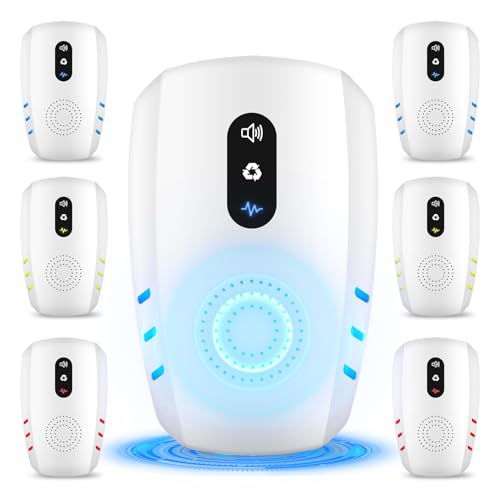
【Advanced Ultrasonic Technology】This ultrasonic pest repeller uses multi-frequency ultrasonic waves within a frequency range of 10kHz-65kHz to help create an uncomfortable environment for common indoor pests. As a pest repellent ultrasonic plug in, it supports daily pest control needs for mice, roaches, ants, spiders, mosquitoes, and more. It is a practical choice for customers looking for a mouse repellent, rodent repellent, or ultrasonic rodent repeller for indoor spaces.
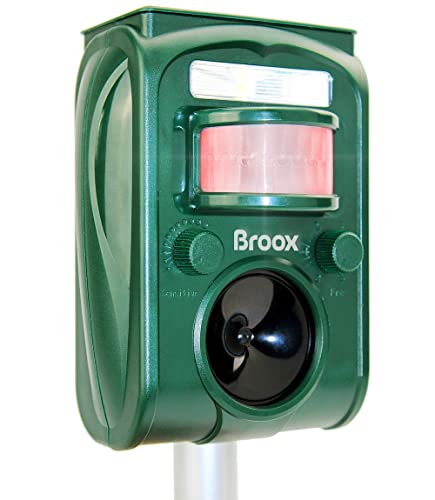
Do you have problem with unwanted animals in your area, garden, farm? Are they destroying your garden or eating the fruits? Do they bring many viruses to you? Let's start to use Broox deer Repellent to solve your problems! This effective device helps you to get rid of unwelcome animal visitors. It contains a motion detector system which detects movements and emits powerful ultrasonic sound and flashing LED light.
Why Squirrels Stay: Attractants Sound Can’t Fix
Ultrasonic noise can’t compete with the real reasons squirrels stay. They are drawn by irresistible attractants that sound alone can’t fix. Food sources like nuts, seeds, and bird feeders offer easy meals that bring them back repeatedly. You cannot simply blast away their need for shelter; attics and nest boxes provide warm, secure refuges they prefer. Squirrels also rely on emotional responses, prioritizing safe nurseries for their young and cached food locations. For indoor pests, a UV light mosquito trap offers a more targeted solution by attracting and capturing flying insects. During winter, they cling to familiar territories, heavily depending on stored supplies. Habitat modification—removing accessible food and sealing entry points—is essential to break their connection to your property. Without addressing these core attractants, ultrasonic devices will remain ineffective against their persistence. For comparison, a Venus flytrap effectively captures tiny prey using trapping mechanisms designed for specific insects, not for persistent larger animals like squirrels. For indoor pests, focusing on effective pest control through proven methods like zappers offers a more reliable approach than relying on sound alone.

– With Weight-Activated Closure. The weight-activated design helps limit squirrel access to seed.

🐦【3-Port Design for Diverse Birds】Three squirrel-proof feeding ports accommodate sunflower seeds, mixed grains, and suet, designed to attract finches, woodpeckers, chickadees, and other backyard birds. The thick PC tube lets you monitor seed levels, creating an all-day birdwatching hub for bird feeders for outdoors squirrel proof enthusiasts.

WEIGHT-ACTIVATED SQUIRREL PROOF BIRD FEEDER : When a squirrel climbs on the feeder, its weight tiggers the closure of feeding ports, ensuring only birds can access the seeds.
Proven Alternatives to Ultrasonic Squirrel Repellers
Structural repairs are the most effective way to keep squirrels out for good. Seal gaps in roofs, soffits, and vents with 1/4-inch hardware cloth to prevent entry. Install chimney caps and repair rotten boards to eliminate weak spots. Ensure no openings are large enough for squirrels to gnaw through, as small gaps can become access points. For fencing applications, choosing the best chicken wire ensures a durable barrier against persistent pests. If spiders are a separate concern, best bug bombs for spiders can provide targeted indoor pest control. If black widows are also an issue near entry points, wasp spray can kill them on contact but should not be used as a long-term solution.
Trim tree limbs at least eight feet away from your roof to prevent squirrels from jumping onto your home. Remove bird feeders, which often attract squirrels and provide easy food sources. Install metal bands around trees to stop climbing, and use squirrel-proof baffles on feeders to deter acrobatic attempts.
For active infestations, trapping squirrels legally is an option. However, trapping alone won’t solve the problem unless combined with exclusion repairs. Otherwise, new squirrels will simply replace those removed. Barriers and sealing are long-lasting solutions that outperform sound-based repellents, which often fail to deliver results.

Galvanized hardware cloth roll 48 inches x 50 foot with 1/2 inch mesh 19 gauge.
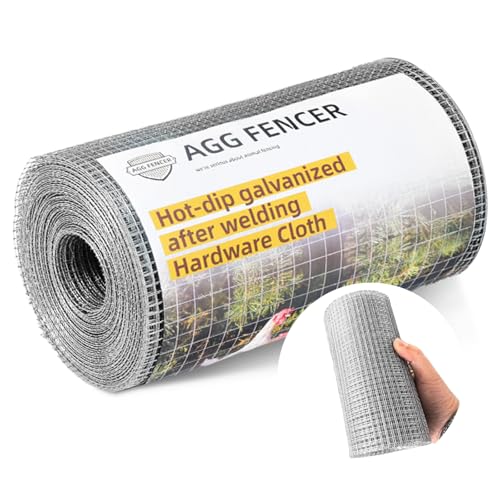
Product details: The length of this hardware cloth is 8 inches/ 20.32cm, the width is 25ft/ 7.62m, and the hole size is 1/4 x 1/4inch. It is very suitable for repairing damaged chicken coops, gaps under houses and other small-sized damaged holes

Size Specification: 2 sheets wire mesh, the size of each piece is 13.7 x 40 inches, wire diameter 0.52 mm
The Bottom Line: Ultrasonic Repellers Are a Waste of Money
Plug-in ultrasonic pest repellers are ineffective. Scientific evidence shows that they don’t significantly reduce pest populations. Field studies indicate no measurable difference in pest activity when these devices are used. Any initial alert or startle response quickly diminishes as pests become accustomed to the sound, a process called behavioral adaptation. Sound habituation means pests ignore the noise over time, making the device worthless as a long-term solution. These repellers do not target entry points or food sources that attract pests. Reviews consistently highlight their lack of effectiveness. Manufacturers claim they provide easy pest control, but real-world results do not support this promise. In the end, you’re spending money on a device that science suggests won’t work, instead of investing in proven methods like structural repairs or physical barriers that actually keep pests out. Furthermore, the same principle applies to bed bugs, as controlled lab tests show the devices fail to repel or kill them.