

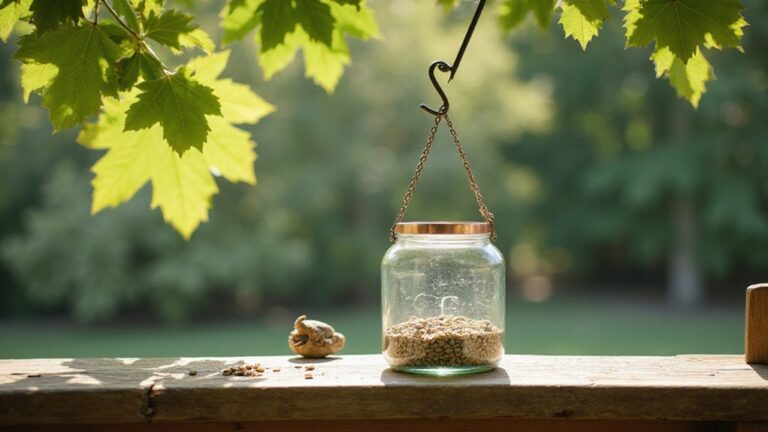
Having trouble keeping squirrels away from your bird feeder? If so, you’re not alone.
A simple DIY setup can make your feeder squirrel-proof in just minutes, using common materials like a metal pole, PVC pipe, and a baffle.
With a few easy tweaks, you’ll keep the critters at bay and attract the birds you want.
Keep reading for quick tips to get started.
Why Squirrels Outsmart Most Feeders (And How to Beat Them)
Squirrels outsmart most feeders because they utilize a full toolkit of climbing, jumping, and chewing techniques to access seeds. They launch from nearby surfaces or hang upside down to reach seed ports, exploiting any foothold or hanging hardware that provides easy access. Many traditional feeder designs fail because they offer footholds on perches or hardware that squirrels grip effortlessly, making it easy for them to break in. For those seeking a ready-made solution, best squirrel baffles for bird tables offer a pre-tested alternative to DIY methods.
To prevent this, you need to change how your feeder is built. Weight-activated models work by closing the seed ports when a squirrel lands on them, but they must be properly calibrated—if not, squirrels can still access the seeds without triggering them. Cage-style barriers can block paw access by surrounding the feeder with tight wire mesh, but spacing between the wires must be small enough to prevent partial entry. Mechanical options like motorized feeders spin or jerk to disturb squirrels, but these are more complex to maintain. Adding a dome baffle above the feeder can also block squirrels from dropping down from overhead branches.
The most effective solution combines a weight-activated or cage barrier feeder with smooth metal poles. These poles eliminate climbing routes entirely, as squirrels find it difficult or impossible to grip or climb on smooth metal surfaces. Employing multiple strategies together creates a more foolproof barrier and keeps your seeds squirrel-proof. For similar pest control challenges, bee suits shield from wasps by using secure mesh and elastic closures, though they are not a solution for squirrel-proofing feeders.
3 Rules for a Squirrel-Proof Feeder Location
To prevent squirrels from accessing your feeder, follow these three placement rules. First, keep your feeder at least 10 feet away from any nearby launch point such as trees, fences, or deck rails. Squirrels can leap about 7 feet horizontally, so any closer, and they can make a direct jump. Second, position the feeder 5 to 6 feet off the ground to make ground access difficult. Height alone may not stop the cleverest squirrels, but it greatly reduces their chances. Third, ensure there is at least 9 feet of clear vertical space above the feeder. Overhanging branches or structures can allow squirrels to drop in from above, so measure from the highest perch, not just the ground, to maintain this clearance. Following these rules creates a physical barrier that keeps squirrels at bay before they even attempt to reach your bird food. For more permanent exclusion, consider installing deer netting options as an effective pest control barrier. For homes also troubled by wood-destroying pests, selecting top bee traps can similarly address carpenter bee infestations around the feeder location. Additionally, using specific bug bombs can help eliminate spider problems in nearby sheds or garages where feeders are stored.

Bigger and Wider Design: 19” diameter design makes this squirrel stopper more effective than other sizes. Larger sizes have greater jitter, no matter if rodents fly up or climb up, they will not be able to stand stably on the baffle. Anything smaller than 19 inches cannot step over this baffle easily, which means that the foods in your bird feeder can be specially provided to feathery friends instead of greedy squirrels or raccoons.

A premium product for a lifetime of peaceful bird feeding. Our largest-capacity model, the Squirrel Buster Plus squirrel-proof bird feeder is also our most popular. Measuring 28" tall from base to hanger, the Squirrel Buster Plus holds a whopping 5.1 lbs of birdseed and features our patented Cardinal Ring System.

Squirrel Proof Bird Feeder — This tube bird feeder keeps seeds safe from squirrels while attracting colorful birds like cardinals, chickadees, and woodpeckers. The built-in baffle and sturdy design ensure only birds can access the feed, and the tube holds up to 5 lbs. of seed for fewer refills.
Build a Pole-Mounted Squirrel-Proof Feeder in 10 Minutes
You can build a pole-mounted squirrel-proof feeder in about 10 minutes with simple materials. Start by inserting a smooth metal pole into the ground, as squirrels struggle to grip smooth metal surfaces. Drive rebar into the ground for added stability, then slide a PVC pipe over the rebar. Drill holes near the top of the PVC pipe to secure a cross-arm with U-bolts, creating a stable mount for your feeder. Cap the PVC pipe at the top to prevent water from entering. Select a metal baffle at least 22 inches wide and mount it 4 to 4.5 feet above ground, ensuring it covers the path squirrels could use to reach the feeder. A live animal trap set in the yard requires a similar attention to placement and bait strategies to avoid catching non-target animals. For extra longevity, you can also mount birdhouses on the PVC pipe with a long screw and nut. Hang your bird feeder above the baffle, keeping everything above 4 feet and avoiding any parts that extend below. Use weather-resistant hardware for a durable, sleek look, and place the setup away from climbing surfaces. A pond netting option can also be draped over nearby bushes to protect smaller water features from falling debris. This simple design effectively keeps squirrels at bay while attracting birds, and maintaining the feeder’s performance over time relies on understanding fogger longevity as a separate weather-related factor.
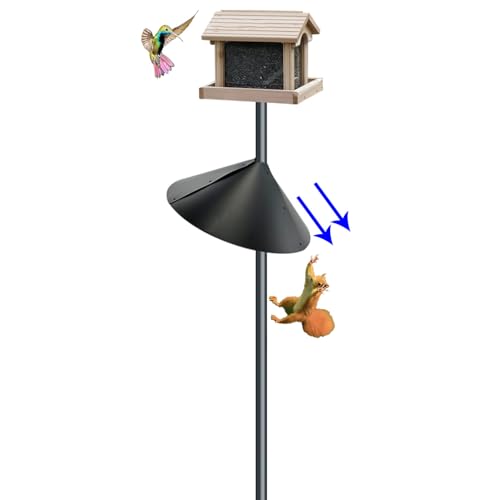
16.5-Inch Extra-Wide Design: Blocks squirrels, raccoons, and other rodents from climbing or jumping onto bird feeders. The broad, angled surface prevents animals from bypassing the baffle, reducing seed waste and keeping birds undisturbed.
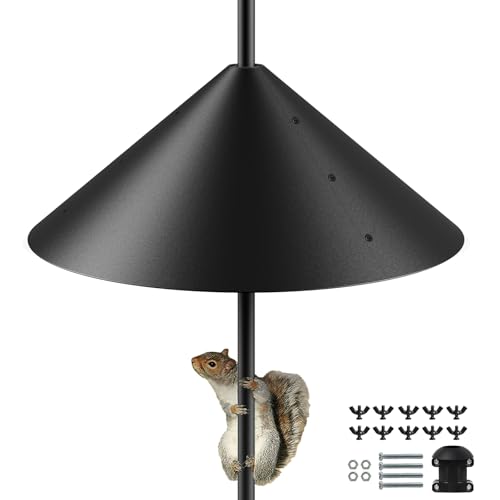
Chew-Proof Design with Metal: This metal slinky squirrel baffle made from sturdy metal materials designed to withstand outdoor conditions and squirrel chewing, ensuring long-lasting protection.

Metal-built for durability: This slinky squirrel baffle is made of tough metal, resisting both outdoor elements and squirrel gnawing for lasting protection. Squirrels can chew nuts, but not this. More durable and less troublesome than plastic PP squirrel baffles
Use a Slinky or Cone Baffle to Block Climbing Squirrels
A Slinky or cone baffle are effective methods to block climbing squirrels. A Slinky-style baffle uses a spiral shape to create a slippery, unstable surface that prevents squirrels from gaining traction. This causes them to slide back down repeatedly, making climbing difficult. It works best on smooth poles up to 2 inches in diameter. The spiral reduces grip, and since it doesn’t form a hard barrier, squirrels are less likely to attempt to push through. When handling these baffles, protective gear like thick gloves can prevent bites if a squirrel is already trapped near the pole. For maximum effectiveness, choose a Slinky made of metal rather than plastic to ensure the surface is too slick for claws to dig in. If the slinky is not long enough, you can also anchor it with chicken wire to prevent squirrels from simply jumping past the spiral.
Alternatively, a cone baffle provides a wide, slippery barrier around the pole. You can make one from sheet metal or plastic, cutting it into a wraparound cone that’s broad enough to prevent jumping around it. Mount the cone about 4 to 5 feet high, at least 10 feet from trees or roofs, to discourage squirrels from climbing around the edges.
Both styles rely on smooth, metal surfaces to minimize grip. It’s important to position your feeding station above the baffle, not beside other climbable structures, to prevent squirrels from bypassing the barrier. Proper placement and smooth surfaces make these baffles more effective in deterring squirrel climbs.

Efficient Anti Climbing Barrier: this flexible metal coil spring forms an unstable wobbly barrier to block squirrels climbing poles; Its continuous bouncing motion disorients rodents fully and protects bird seeds well, serving as reliable squirrel deterrent for bird feeders for standard shepherd hook poles

Bird Feeder Guard Device – This spring baffle keeps rodents away from bird feeders and birdhouses, protecting poles and hanging feeders. The black spring guard blends in, keeping your garden environment beautiful and simple.

High Quality Metal: The black squirrel barrier is made of high quality iron ally which adopts electroplating process, it has good resilience, durable and not rusty. It is a perfect squirrel deterrent to protect outdoor bird feeder poles
Fast PVC Tube Feeder From Pipe and Hardware Cloth
To build a fast PVC tube feeder that keeps squirrels out, start with a 4-inch black plastic drain pipe, two end caps, and quarter-inch hardware cloth. Cut one or two feeding openings near the lower end of the pipe using a hole saw. Roll the hardware cloth into a snug tube and insert it inside, lining the interior of the pipe. This mesh securely holds sunflower seeds while allowing birds to access them through the openings. Drill a drain hole in one end cap and attach it over the feeding end. Close the opposite end with the second cap after filling the pipe. Thread a wire hanger through the top holes for hanging. This compact design helps protect wild bird habitats by preventing larger animals like squirrels from reaching the feed, and you can paint the pipe to improve its appearance without affecting its function. Unlike these traps which rely on attractant scent lures to draw yellow jackets inside a container.

MADE IN THE USA: For over a century, Ventral has been fabricating pipe lumber and fittings, employing more than loyal, hard-working Americans; All of our products are proudly made and designed in the USA

Conforms to meet Standards: ASTM D 1784, ASTM D 2665, ASTM D 3311 and NSF 14

1-[Good Feature]: Corrosion resistance, good durability, and good drainage system accessories; High impact resistance, high hardness, and not easily damaged during operation; Easy to install, simple to connect, and easy to operate
Seed Swaps That Send Squirrels to Your Ground Feeder
Replacing your standard seed mix with safflower, nyjer, or millet can effectively deter squirrels from your ground feeder. Safflower has a bitter taste that squirrels dislike, while birds like cardinals and chickadees enjoy it. Nyjer’s tiny size makes it difficult for squirrels to handle, but goldfinches love it. Millet encourages ground feeding, drawing sparrows and juncos away from hanging feeders. This natural redirection mimics how birds forage in the wild, supporting habitat enhancement without extra effort. It also changes squirrel behavior by reducing their interest in your main feeders. Additionally, ground-level activity may create a perceived predator presence, which discourages squirrels from climbing. Using spicy capsaicin blends can add another layer of deterrence—birds eat happily while squirrels lose interest. For even better results, consider building a DIY rat bait station to safely manage persistent pests near your ground feeder. If you have young trees nearby, constructing simple DIY tree guards can protect their bark from squirrels seeking alternative food sources. Stick with safflower, nyjer, and millet to gently encourage squirrels to head to your ground feeder instead.
Reinforce Your Feeder When Squirrels Chew Through Barriers
Reinforcing your feeder is essential when squirrels chew through plastic barriers. Use heavy-gauge metal or powder-coated steel to replace vulnerable plastic parts like ports, caps, and perches, as they are the primary targets for gnawing. Installing a metal cage around the entire feeder creates a sturdy physical barrier, making it difficult for squirrels to access the food. Position wide dome baffles above or below the feeder to block climbing routes; ensure baffles are at least four feet high and securely anchored so they cannot be moved or bypassed. Strengthen the mounting system with heavy-duty metal hooks and locking lids to prevent wobbling that squirrels can exploit for leverage. After any attempted attack, recheck all screws and brackets because even glued seams may fail under persistent gnawing. Lastly, eliminate nearby launch points such as branches or fences that squirrels could use as launching pads to bypass your defenses. Always opt for thick-walled metal components, as thin sheet metal quickly succumbs to sharp teeth and determined chewers. For additional protection, consider using a Macabee trap to safely remove persistent squirrels from your yard.

【Anti-Tip, Locked-In Bowl With a Steel Buckle】A metal locking buckle pins this bird food bowl to the cage, so even a strong macaw cannot tip it, flip it, or snatch it out. Food and water stay put: no-mess feeding, less spilled seed on the tray, and no wasted pellets or soggy bedding.

Size: 6.89x6.89x10.24inch. Holds up to 1.5 lb Seed.
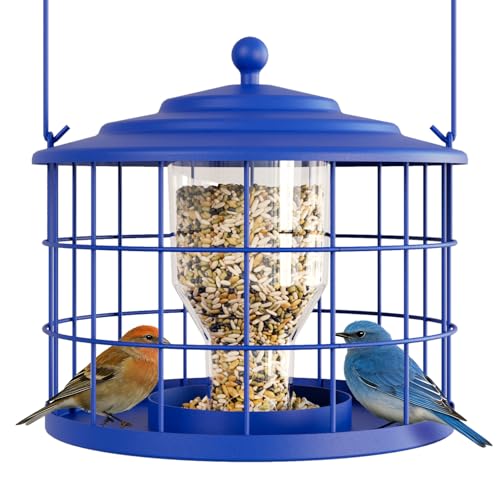
Squirrel Proof Bird Feeder Cage: The protective metal cage helps deter squirrels from easy access to seed while creating a calmer feeding space for small birds
Maintain Your Setup After Rain and Seasonal Changes
Seasonal changes mean your setup needs more frequent inspections to stay protected. During warm, humid periods, mold risk increases, so you should check weekly and clean off any mold or debris right away. After snowmelt or cold-to-wet shifts, residue can accumulate, requiring you to remove wet leftovers immediately. Keep an eye out for black mold or caked debris, which can compromise the integrity of your setup. Adjust any feed zones that consistently hold water to prevent issues like pooling or rust. For added durability, consider using galvanized wire fencing to resist corrosion and weather damage. A durable bird netting over your balcony can similarly prevent moisture buildup and protect against weather exposure. Placing a trap near burrows can help control persistent groundhog activity in your yard. Staying proactive ensures your setup remains dry, fresh, and squirrel-proof throughout seasonal transitions.