


If you’re tired of dealing with pesky mosquito larvae in standing water, you might wonder about a quick, effective solution. Mosquito Bits are tiny granules that target mosquito larvae within 24 hours, making them a handy tool for short-term control.
They’re safe for pets and pollinators, and easy to use around your yard or houseplants. Keep reading to learn how to apply them for the best results.
What Are Mosquito Bits and How Do They Work?
Mosquito Bits are small granules that contain the bacterium *Bacillus thuringiensis israelensis* (Bti), which targets mosquito larvae. You sprinkle these granules onto standing water sources like puddles, plant saucers, or tree holes where larvae are present. Once ingested by mosquito larvae, Bti releases toxins that rapidly destroy their gut within 24 hours, preventing them from developing into biting adults. Because Bti is highly selective, it only affects mosquito larvae and does not harm other aquatic life or beneficial insects. This method provides fast, localized control, stopping mosquitoes early in their lifecycle before they can pose a biting threat. For example, similar pest control products like bird spikes rely on physical barriers rather than biological targeting to manage nuisance animals. In contrast, traps designed for carpenter bees often use physical exclusion and entry holes to capture adult insects without relying on a biological larvicide. Optimal placement of these traps near active nesting sites significantly improves capture rates by intercepting bees as they emerge or return to their tunnels.

Quick acting formula
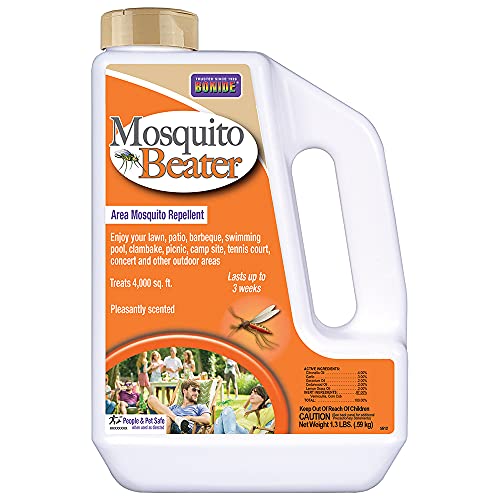
Mosquito Beater Ready-to-Use Granules from Bonide effectively control mosquitoes; with Mosquito Beater Granular Repellent you can enjoy your surroundings

MOSQUITO LARVAE KILLER - Mosquito Beater is a highly selective microbial larvicide, effective against mosquito larvae in standing water. It kills developing mosquitos upon ingesting before they become breeding, biting adults.
Mosquito Bits vs. Dunks: What’s the Difference?
Mosquito Bits and Dunks differ primarily in their form, speed, duration, and ideal use cases. Bits are small, granular pellets that release the bacteria Bacillus thuringiensis israelensis (Bti) immediately upon contact, killing mosquito larvae within roughly 24 hours. They are best suited for short-term, shallow, or temporary water sources such as buckets, drums, or birdbaths. Dunks are donut-shaped rings that float on water and provide a slow, ongoing release of Bti over time, lasting up to 30 days. They are ideal for more stable environments like ponds or large outdoor containers. Using Bits offers rapid mosquito control, while Dunks provide longer-lasting, continuous suppression. Combining the two can give you quick relief followed by sustained control, but always check product compatibility to ensure they are safe to use together in your specific situation. Unlike ultrasonic pest repellers, which have not been proven to reliably deter mosquitoes in scientific tests, Bti-based products like Bits and Dunks offer a confirmed biological method for killing larvae. For a completely separate yard issue, some gardeners have tested whether spicy additives work, noting that birds show little reaction to capsaicin, so hot pepper suet mainly deters mammals rather than avian visitors. When installing physical barriers like fences to keep pests out, chicken wire spacing must be small enough to prevent mosquitoes or other small creatures from passing through, as gaps larger than the intended target species will undermine the barrier’s purpose.

The only product with bti, bacteria toxic only to mosquito larvae

Summit Responsible Solutions Mosquito Bits - Quick Kill, 60-Ounce (2 pack)

Convenient Mosquito Larvae Pouches Set: Includes 142g mosquito larvae pouches plus 1 g, 2.5 g, 5 g, 7.5 g, and 15 g measuring spoons; treats about 132-18744 gallons and works up to 150 days to help stop larvae from becoming biting adults (Contains 4.25% S-methoxyfenozide. Pet-safe when used as directed. Avoid ingestion — toxic if large amounts eaten.)
Top Uses for Mosquito Bits
Mosquito Bits are effective for controlling mosquito and gnat larvae in standing water around your home. To prevent pupation, sprinkle the bits directly into bird baths, rain barrels, flower pot saucers, roof gutters, or old tires holding water. Use about 1 teaspoon per 25 square feet for small areas, adjusting the amount for larger or heavily polluted water sources. You can also make a “Mosquito Bits tea” by soaking the bits in water for 24 hours, then drenching the soil of houseplants or flower beds with the liquid once a week to suppress fungus gnat larvae. Reapply after heavy rains to maintain continuous control. This biological method targets only mosquito and gnat larvae, leaving beneficial insects unharmed and supporting organic gardening. Unlike with wasps, which may require a bee suit for close-quarters protection, no such protective gear is needed for applying Mosquito Bits. Note that, unlike these bits, ultrasonic pest repellers are not proven to effectively repel bed bugs or other common household pests. For protecting bird feeders from larger pests, you can build a DIY squirrel baffle using cheap materials and simple tips to keep squirrels away from the seed.

8oz container with shaker top

A fantastic option for minimizing mosquito activity around your garden and yard

Corn cob granules coated in BTI, the Bits do not last long but provide a punch that will turn water, black with larvae, to a clear pool void of future mosquitoes
Why Mosquito Bits Are Safe for Pets and Pollinators
Mosquito Bits are safe for pets and pollinators because their active ingredient, Bacillus thuringiensis israelensis (Bti), targets only specific insect larvae such as mosquitoes and certain flies. Bti produces toxins that affect only these larvae by disrupting their digestive systems, leaving mammals, including dogs and cats, unharmed. EPA guidance confirms that Bti does not impact honey bees or other beneficial insects, meaning your yard’s pollinators remain protected. When used as directed, Mosquito Bits pose no health risks to pets. Still, it’s advisable to avoid inhaling the dust and wash your hands afterward. Proper application ensures effective mosquito control without risking your animals or pollinators. For those who also want to safeguard their fruit harvest, tree netting offers an additional physical barrier that keeps pests away without chemicals. Unlike chicken wire, which rats can easily chew through, metal mesh provides a durable alternative that blocks rodents from accessing gardens or stored items.
How to Apply Mosquito Bits to Standing Water
To apply Mosquito Bits effectively, measure the surface area of the standing water, not the depth. The correct rate depends on the size of the water body. For small containers like birdbaths, use 1 teaspoon per 25 square feet. For larger areas such as ponds, apply 1 tablespoon per 75 square feet. When treating broad, open water surfaces, use 4 ounces per 1,000 square feet, increasing to 8 ounces if the water is polluted or larvae are larger. For contexts requiring sustained control, you can instead use mosquito dunks at a rate of one dunk per 100 square feet of surface area. Distribute the bits evenly across the entire surface, avoiding dumping them in one spot. A uniform spread ensures the larvicide contacts every part of the water surface, maximizing effectiveness. Focus on containerized sites like rain barrels, gutters, and tree holes as well. Avoid handling the bits with bare skin, as nitrile gloves provide superior chemical resistance for this task. For a simple DIY alternative, you can repurpose a carpenter bee trap to hold a small water reservoir for targeted treatment. Proper coverage helps prevent mosquito breeding in all types of standing water.
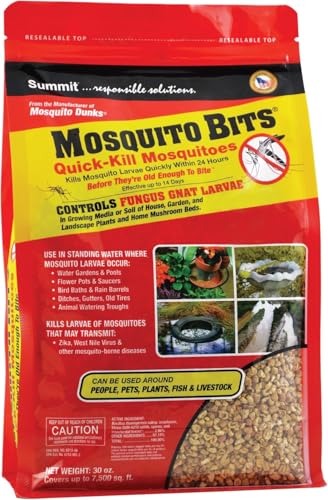
Environmentally Sound Biological Mosquito Control

Each Chunk kills mosquito larvae for 30 days or more.

NATURAL, PET-SAFE YARD PROTECTION: Our DEET-Free formula uses a potent blend of essential oils—including Geraniol, Lemongrass, Citronella, and Cedarwood—to create a powerful natural mosquito repellent for yard and home. Safe for use around your family, pets, livestock, and gardens when used as directed.
How Often Should You Reapply Mosquito Bits?
You should reapply Mosquito Bits every 7 to 14 days depending on the infestation level and environmental conditions. When larvae are abundant or organic matter in the water is high, use a higher rate of application on a 7-day schedule. For lighter infestations and cleaner water, sticking to every 14 days is sufficient. Heavy rain and prolonged sunlight can reduce the product’s effectiveness, so reapply after any weather event that dilutes or washes away the Bits. To minimize environmental impact and reduce waste, consider switching to longer-lasting Mosquito Dunks once the initial mosquito population is under control. Always target standing water habitats for reapplication to ensure ongoing control. For readers curious about other wildlife repellents, note that while some claim coyote urine repels skunks, proven results and safer alternatives are available. Similarly, for indoor pest issues like fruit flies, using top fruit fly traps ensures targeted and effective control without relying on unproven methods. As with pest management for gardens, building simple DIY tree guards can protect young trees from animal damage using cheap materials.

Can Mosquito Bits Kill Fungus Gnats in Houseplants?
Yes, Mosquito Bits can effectively kill fungus gnat larvae in your houseplants when used as a soil treatment. The key is delivering the Bacillus thuringiensis israelensis (BTI) directly to the moist potting mix where the larvae feed. To do this, you can soak the bits in water and then strain the liquid to use as a drench, or sprinkle the granular bits on the soil surface and water thoroughly. Repeating this process weekly for several weeks helps catch emerging larvae as they hatch, breaking the gnat life cycle. Since it targets larvae in the soil without affecting the flying adults, this method provides a safe and organic way to manage fungus gnats, avoiding harsh chemicals and minimizing harm to your plants. For effective outdoor gopher control, a similar organic approach involves using a step-by-step setup with bait and safety precautions. While it may not sterilize the soil completely, it is one of the most effective organic options available. For comparison, wasp spray toxicity is an important consideration when using chemical pesticides indoors, as it can pose risks to humans and pets.
Which Diseases Can Mosquito Bits Help Prevent?
Mosquito Bits can help prevent several mosquito-borne diseases by targeting larvae in standing water and soil. They are effective in reducing the population of adult mosquitoes, which decreases the risk of bites that transmit illnesses like dengue, Zika, West Nile virus, chikungunya, and malaria. Health experts agree that controlling breeding sites is the most effective preventive measure to lower disease transmission. For targeted application, homeowners should follow proper step-by-step setup instructions, similar to those for precise pest control tools, to ensure maximum effectiveness.
Using Mosquito Bits on your property also contributes to community health efforts. When individual households treat standing water, the overall mosquito population decreases, which reduces the chances of disease outbreaks for everyone nearby. This kind of control has a positive economic impact by lowering healthcare costs associated with mosquito-borne illnesses and supports global efforts in disease prevention. Remember, applying Mosquito Bits is a proactive step to stop these diseases before they can spread.
Where Not to Use Mosquito Bits
You should not use Mosquito Bits in areas where water is intended for human consumption or regulated drinking water supplies. Federal and label guidance explicitly prohibit their use in treated, finished drinking water reservoirs or containers designed for drinking purposes. These products are meant to target mosquito larvae in standing water such as birdbaths, unused tires, or rainwater collection points, but never in water that will be consumed by people. Always ensure you’re applying Mosquito Bits only in non-potable, stagnant water to stay compliant and avoid contamination risks.
Avoid applying Mosquito Bits on dry garden soil, mulch, or any surface where water does not stand. The product works only when it comes into contact with larvae in water; dry soil or porous surfaces won’t deliver the Bti to mosquito larvae. Applying them on such surfaces is ineffective and wastes the product. Similarly, do not use Mosquito Bits in moving or fast-draining water systems like ditches, streams, or outlets where water flows continuously. The flowing water quickly disperses or flushes away the bits before they have a chance to work, reducing their efficacy. For best results, target stagnant, containerized water sources where larvae are likely to develop.