


Got a skunk problem and wondering how to catch it safely? Building a homemade trap might be the best solution, and it can be straightforward if you know what supplies and steps to follow.
By the end, you’ll be ready to set up a functional skunk trap that helps resolve your issue humanely. Keep reading for all the details you need.
Verify Local Laws Before You Trap a Skunk
You must verify your local laws before trapping a skunk. Many states require a trapping license or a specific nuisance wildlife permit before you can legally trap one. Some areas allow landowners to handle skunk removal on their property without a permit, but trapping on land you do not own almost always requires authorization. It’s essential to submit any permit applications well in advance of starting your trapping efforts. Never assume that trapping is legal without checking the rules for your county and city, as failure to comply can lead to serious legal consequences. Checking with local wildlife agencies or regulatory offices ensures you follow the correct procedures and avoid potential fines or legal trouble. Locating the best bee traps for carpenter bees requires similar attention to product specifications.
Why a Homemade Skunk Trap Beats Store-Bought Options
Building your own skunk trap makes more sense than buying a commercial option because it drastically reduces upfront costs. Homemade materials eliminate brand markup and retail packaging, making it especially effective for a single capture. Customizing the trap allows you to precisely size and shape it for tight spaces under porches or decks, ensuring it fits your yard’s specific layout. A tube trap with a guillotine door works well for this purpose, as it drops straight down when the skunk steps on the treadle. For best results, position the trap near active burrows and bait it with peanut butter or overripe fruit, much like you would with a yellow jacket trap to lure pests effectively. For even greater success, consider incorporating features found in live animal traps for rats, such as a sensitive treadle mechanism that triggers reliably with minimal weight. To minimize stress on the animal, you can also follow the humane handling guidelines used for coyotes, which emphasize quick inspection and release.
Enclosed DIY designs help keep the skunk calmer, as a dark interior limits its visual stimuli, reducing the chance of spray. This setup prevents the animal from easily seeing you approach or lifting its tail. Additionally, homemade traps are lightweight and portable, allowing you to fit them into narrow spaces and move them around effortlessly. If the trap breaks or needs adjustment, common household items can usually fix it quickly—no need to wait for manufacturer parts. Overall, a customized build saves you money, offers better fit for your yard, and provides superior handling compared to store-bought options.
What You Need to Build a Live Skunk Trap
Building a live skunk trap requires a sturdy enclosure measuring approximately 2 feet wide, 2 feet deep, and 2 feet high. This size provides enough space for the skunk to enter comfortably while keeping the animal safely contained. Use ¼-inch plywood or a similar sheet material for the walls, combined with 2×4 lumber to create a strong frame. The enclosure should be covered with galvanized wire mesh with a 1×1-inch grid to prevent escape. For a simpler alternative, you can also use a DIY fruit fly trap bottle design with common household materials for smaller pests. When attaching the wire mesh, ensure consistent spacing of fasteners to avoid weak spots that the skunk could exploit. For a different type of pest control, you can also consult top tree guards for squirrels to protect your garden from climbing rodents.
For the trap door, use a rigid material like metal or heavy wire panel, which can withstand the skunk’s attempts to push or chew through. The door mechanism should be spring-loaded or gravity-style to close swiftly once triggered, minimizing the chance of the skunk spraying. To activate the trap, you will need fasteners such as wood screws, screw eyes, and a trigger pin or release mechanism.
Place baits like strongly scented meat or fish, such as chicken entrails or sardines, deep inside the trap to lure the skunk fully inside. Be sure to position the bait carefully to encourage complete entry. Always wear gloves and protective gear, as skunks will spray if stressed or frightened. Keep the trap low-profile and stable to reduce the risk of the skunk becoming agitated and spraying. Remember to check local laws and regulations before setting the trap.

HEAVY DUTY GALVANIZED STEEL CONSTRUCTION – Made from durable galvanized steel wire for long-lasting strength and reliable outdoor performance in a variety of environments

Vinyl-coated Galvanized Steel: Our hardware cloth is made of durable steel. Galvanization and a black vinyl coating provide maximum rust & corrosion resistance, and high ductility. The premium material also ensures ultimate longevity.

HEAVY DUTY MATERIAL – Flexible yet strong 16‑gauge galvanized steel welded wire prevents sagging and withstands long‑term outdoor exposure
Assemble a Safe DIY Skunk Trap Box
Construct your trap box from ¼-inch plywood or another rigid sheet material to ensure a solid-walled design that minimizes spray risks and contains the animal securely. Focus on smoothing all interior surfaces by filing down sharp edges and protruding fasteners to prevent injury to the skunk. Secure the door thoroughly so it cannot be forced open from the inside; reinforcing the gravity door with additional securing mechanisms is highly recommended before moving the trap. Use large handles, at least 4 inches wide, to keep your hands away from the animal’s reach during transport. Place the trap at least 18 inches above the ground to reduce accidental captures and enhance safety. Covering about half of the box’s length with a solid cover immediately after capturing the skunk helps lower its stress and reduces defensive spraying. Always check that your door hardware operates smoothly, ensuring reliable closure every time. For safer handling, guide the trap into a custom-built skunk trap box made of 4-inch plywood with hinges and brackets to contain the animal without direct approach. Consider using cheap materials from a hardware store to keep the project affordable. Using ¼-inch hardware cloth on the door provides a durable barrier that skunks cannot chew through. Because skunks are easily startled, using a calm approach during setup and transport is essential to avoid triggering a spray response.

“Spray Proof” design: The 6” tube limits the skunk’s ability to lift its tail preventing spraying.

24" long x 6” diameter metal tube. Lifetime Warranty from Manufacturer

Fully enclosed;Solid steel front door;6"x24"
Choose the Best Bait for a Skunk Trap
Strong-smelling protein foods are the most effective bait for a skunk trap. Canned fish such as sardines or tuna, oily cat food, and chicken parts emit powerful odors that attract skunks without triggering a spray. Raw eggs and crispy bacon are also good options because their scents spread quickly and reliably draw attention. While sweet items like marshmallows or peanut butter can be used, they work best when paired with meat to increase their appeal. Place the bait just past the trap’s trigger to encourage full entry, using only about a spoonful of scent-rich bait to prevent overwhelming the trap. Adding a small trail of bait leading to the entrance can entice curiosity, but the main lure remains the potent smell. A skunk that was initially attracted to dry dog food did not enter until the bait was changed to smelly fish like sardines, proving that stronger scents are crucial for success. For persistent rodent issues, using commercial options like top rat bait blocks can provide a reliable alternative for pest control. After successfully trapping the skunk, you may want to cover the trap with a net to prevent direct contact during transport. To keep your home free of other pests, fruit fly traps are an effective solution for eliminating these small nuisances.

Premium Sardines: High-quality canned sardines packed with essential nutrients including omega-3 fatty acids, protein, and vitamins that support heart health and overall wellness

This skunk bait is highly popular with ADC trappers and home owners.

Dunlap's Skunk ADC Bait has a thick paste consistency.
Where Should You Place Your Skunk Trap?
Place your skunk trap where skunks travel regularly to increase the chances of capturing them. Focus on areas with visible signs of activity or damage, such as digging, scratching, or broken plants. Ideal spots include under porches, sheds, decks, near brush piles, or hollow logs where they feel protected. If you’ve identified a den, set the trap 5 to 10 feet from the entrance, ensuring it doesn’t block or seal the opening. Position the trap along pathways skunks use naturally, such as along fence lines, near garages, or close to known travel routes. Place the trap on a level, firm surface to keep it stable—using plywood on concrete if necessary. Consider shaded and sheltered locations to make the trap more inviting. To further mimic a secure feeding spot, you can attach a squirrel baffle above the trap to discourage other animals from reaching the bait. Using a durable material like high-quality chicken wire for the trap’s enclosure can also help prevent skunks from chewing their way out. Using cheap materials like PVC pipe and a bucket can make the trap easier to build and maintain. Set the trap at dusk when skunks become active and check it early the next morning to prevent bait from spoiling and to promptly release any captured skunks. Cover the trap with a towel or tarp to create a dark environment that reduces spray risk.
Stay Safe When Approaching a Trapped Skunk
When approaching a trapped skunk, move slowly and quietly to prevent startling it. Use smooth, deliberate steps and avoid making noise. If you notice foot-stamping or the tail lifting, these are clear signs the skunk feels threatened, and you should back away immediately. Observing these defensive cues is essential for your safety because they warn you when you are too close. For example, if you are also managing standing water where mosquitoes breed, note that mosquito dunks do not harm tadpoles and are safe for amphibians.
Wear heavy-duty gloves and sturdy clothing to protect yourself from potential sprays. Carry a tarp or blanket to serve as a barrier between your body and the skunk. Approach the trap from the side rather than directly in front, since skunks have poor eyesight and may feel cornered or threatened when approached head-on. Once close enough, gently hold the cloth and carefully drape it over the trap to minimize stress for the animal. Remember that regularly lubricating the trap hinges will prevent squeaks (applying a little sprayer pump maintenance to the mechanism) that could startle the skunk. Using quality materials from your fence hardware can also help secure the trap in place.
If the skunk becomes tense or signals distress repeatedly, back away calmly and avoid forcing the approach. Wait until the animal appears more relaxed before trying again. Always read the skunk’s behavior accurately and prioritize caution to ensure your safety.
Cover the Trap to Prevent Spraying
Covering the trap with a soft, non-crinkly material like a tarp or burlap is essential to prevent spraying. Gently drape the cover over the trap after safely approaching and reading the skunk’s body language to avoid startling the animal. Doing so helps the skunk feel hidden and secure, significantly reducing the risk of spraying due to visual stress. It’s best to approach slowly with the cover already raised, shielding yourself and maintaining safety throughout the process. If the skunk shows aggressive signs such as tail raising or stomping, pause and wait until it calms down before continuing. For proper control in nearby water sources, using mosquito dunks effectively reduces insect larvae without harming mammals or birds.
Place the trap in shaded, quiet areas to keep the skunk calm before covering. Remember to leave some ventilation open for airflow to prevent the trap from becoming stuffy. When cleaning the trap after use, wash it with a mild, scent-free soap to eliminate any lingering odors that could provoke agitation or spraying during the next catch. Proper placement, gentle covering, and careful cleaning all contribute to a safer trapping process.
How Often to Check Your Skunk Trap
You should check your skunk trap at least once every 24 hours. This is the minimum, especially since skunks are nocturnal and usually enter traps overnight. Daily checks reduce stress for the animal, prevent dehydration, overheating, and injury. The placement of your trap and the bait you choose do not change this requirement.
Whenever possible, aim to check the trap every 12 hours. More frequent checks improve the animal’s welfare and reduce the risk of injury or stress. During extreme heat or cold, check the trap even more often, as confinement becomes more dangerous quickly. If you’re catching multiple skunks or non-target animals like pets, consider tightening your schedule further.
Keep in mind that local laws might specify stricter check-in intervals. Always verify any legal requirements beforehand. Morning inspections are generally the safest choice since they align with skunk activity patterns and allow you to reach the trapped animal quickly. Frequent, prompt checks ensure the animal’s safety and make your job easier.
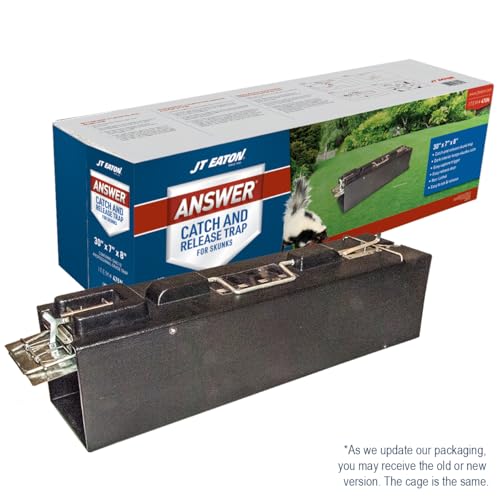
CATCH AND RELEASE TRAP: Humane live trap designed for skunks and other medium-sized pests

Robust construction: The trap is made from one-piece 8 inch16-gauge aluminum tubing, making it durable and indestructible.

Dimensions: 24"L x 9"W x 9"H
How to Release a Skunk Without Getting Sprayed
Approaching a skunk trap calmly and quietly is crucial to avoid getting sprayed. Skunks have poor vision, so slow movements reduce their defensive response. If you notice foot-stamping or a raised tail, stop immediately to prevent startling the animal. Gently drape a blanket or tarp over the trap to act as a visual barrier, which can help absorb any scent and keep the skunk calmer. Stand beside or behind the trap instead of in front of the door. Open the trap slowly using a long pole or string to maintain a safe distance. Allow the skunk to exit on its own toward open space or cover, avoiding sudden movements. Releasing at night aligns with their natural habits and adheres to trapping regulations. Always wear gloves, long sleeves, and eye protection. After opening the trap, step back and wait patiently—rushing only increases the risk of a spray. Using a safe dispatch technique with acetone and a needle can prevent spraying when trapping is unsuccessful.