

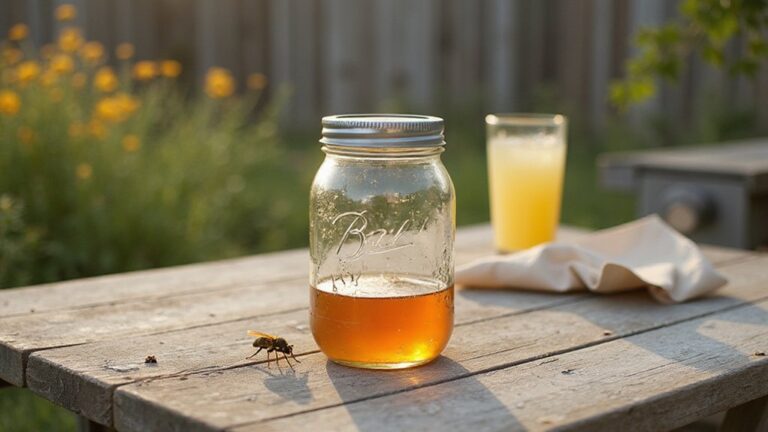
Struggling with wasps buzzing around your yard? Making your own trap is quick, simple, and effective. With just a two-liter bottle and some bait, you can create a DIY solution that targets wasps without harming honey bees.
Keep reading to learn how to set up and position your trap for the best results.
Build Your Own Wasp Trap in Under 10 Minutes
You can build a basic wasp trap in under 10 minutes using simple materials. Start with a clean two-liter plastic bottle and a sharp knife or scissors. Mark a straight line at the bottle’s shoulder and cut along this line to create two sections. Remove the cap and invert the top part so it funnels into the bottom section, and fit them together securely. To keep the top in place, you can seal gaps with tape. For hanging, punch two holes opposite each other near the top rim and thread a string through them. To avoid accidentally catching beneficial animals, use caution and wear protective gear similar to handling a trapped skunk. For additional protection around your water feature, you can also use pond netting to cover the trap’s opening and prevent larger creatures from entering. Choose trap colors carefully: wasps are attracted to yellow and white, so avoid using these colors if you want to catch fewer wasps. Place your trap near areas with wasp activity, such as eaves or trash cans. Fill the bottom with about an inch of a liquid solution, making sure it stays below the funnel opening. For best results, use a sweet bait that mimics the attraction of carpenter bees to wooden structures. This simple design is quick to construct and effective at trapping wasps efficiently.
The Best Bait for a Wasp Trap (Without Attracting Bees)
Choosing the right bait is essential to catch wasps without attracting honey bees. Instead of using pure sugar water, mix fruit juice with a splash of apple cider vinegar. This combination releases a sweet scent that draws wasps but repels honey bees. Seasonally, wasps’ dietary preferences shift: in spring and early summer, they seek protein, so offering meat scraps can be effective. As the season progresses, switch to fermented sweet baits like fruit or sugar-based mixtures to attract wasps. For specific species such as yellow jackets, chemical attractants like heptyl butyrate are available. Avoid honey and floral syrups entirely, as these can lure pollinators. Using bee-safe bait choices ensures your trap targets wasps effectively while protecting beneficial insects in your yard. For those dealing with aggressive wasps, wearing a bee suit is not a reliable shield against stings. For bait stations, some users adapt bait recipes to include attractants commonly used in commercial rodent poisons. To keep your equipment safe from wasp residue, regularly clean your respirator with mild soap and water to prevent clogged filters and ensure proper function.

REFILL: Replacement lure to be used with Spectracide Wasp, Hornet, & Yellowjacket Trap. Each lure lasts up to 30 days.

FOR RESCUE! YELLOWJACKET TRAPS – This refill cartridge provides 10 weeks of yellowjacket attracting power when used in the RESCUE! Reusable Yellowjacket Trap.

Complete Wasp Trap Set: This outdoor yellowjacket trap set includes 4 wasp traps, 8 attractant refills, and 4 hanging strings. This complete hanging wasp trap set provides everything you need to effectively eliminate wasps, hornets, yellow jackets, and fruit flies from outdoor spaces. One wasp trap with 2 packs of attractant lasts for 3-6 weeks with no daily maintenance required
Where to Hang Your Wasp Trap for Maximum Results
Open, visible spots are best for hanging your wasp trap. Position it so the attractant can disperse freely without being hidden in dense bushes or foliage. Hang the trap downwind of your activity zone to encourage wasps to approach from away and stay clear of areas with pet food or feeding stations. During hot, dry weather, partially shade the trap to slow evaporation and keep the attractant effective longer. In cooler conditions, a sunny spot works better to help maintain the trap’s temperature and attract more wasps. Mount it using fences, shepherd’s hooks, or tree branches, ensuring that the entry holes remain unobstructed for easy access and that it stays out of reach of pets or children. For best placement, avoid positioning the trap near a chicken coop, as mink traps require careful siting to protect poultry. To further optimize trap performance, consider adjusting the attractant concentration based on temperature to slow evaporation in hot weather.

Effective and Durable: There are double-entry tunnels on the trap, one on each side, increasing the chance of attracting more insects to the device. These nasty insects will be attracted by added sugar water and ultraviolet rays at night, producing an irresistible odor, they will be submerged in water or eventually dehydrated

Wide Application: This wasp trap is highly versatile, effectively attracting not only wasps but also other flying insects such as flies, mosquitoes, and moths. Once lured, these insects become adhered to the sticky surface, ensuring their removal. It is well-suited for outdoor environments including gardens, courtyards, and campgrounds.

Effective and Durable: There are double-entry tunnels on the trap, one on each side, increasing the chance of attracting more insects to the device. These nasty wasps will be attracted by added sugar water and ultraviolet rays at night, producing an irresistible odor, they will be submerged in water or eventually dehydrated
How to Refill and Clean Your Wasp Trap Each Season
To keep your wasp trap effective each season, regular cleaning and bait refreshes are essential. Start by emptying the trap, removing any dead insects and old bait. Rinse it thoroughly with hot water to remove residues and then wash all removable parts with warm, soapy water to eliminate slime. Allow everything to dry completely before refilling to prevent mold and ensure the trap functions properly.
Using the right bait at the right time makes a difference. Early in the season, protein-based bait attracts wasps as they search for sources rich in protein. As the season progresses, switch to sugar-based bait like fruit juice to lure them with sweet options. For a similar effect, many commercial fruit fly traps use sugar-based bait to attract pests. If you want to protect your chickens from aerial predators, installing bird netting options over the coop can provide a secure barrier. Replace the bait every two to four weeks, or more frequently during hot weather, as warm temperatures can cause bait to spoil faster. Avoid just topping off old bait; always dump it out and refill with fresh bait to keep attraction strong. If you are also building a physical barrier around your garden, selecting durable chicken wire can help keep larger pests away from the area.
At season’s end, empty and thoroughly wash the trap before storing it. Dry all parts completely to prevent mold during storage. Keep the trap in a cool, dark, dry place and store attractants separately in sealed containers. Performing these maintenance steps annually ensures your trap stays efficient, odor-free, and ready for use each season.

Effective Control – These offer a simple and chemical-free solution to protect your wooden structures from damage.

Ideal Set: Comes with 3 different p trap brushes including 20 Inch drain snake,61 Inch flexible wire brush,18 Inch drain clog remover tool brush. These long - lasting cleaning tools offer great value

Traps Multiple Species – Unsure if your problem is wasps, hornets, or yellowjackets? The RESCUE! WHY Trap attracts all of them, so you’ll never need to identify an insect. Simply hang outdoors and watch them pile up.
Avoid These 5 Common Wasp Trap Mistakes
Even if you build a sturdy wasp trap, several common mistakes can undermine its effectiveness. One of the most critical is trap placement. Keep the trap at least 20 feet away from seating areas and entry doors to avoid attracting wasps toward people. Consider wind direction too; positioning the trap where foragers will fly against the wind helps intercept wasps before they approach your space.
Another mistake is neglecting bait freshness. Wasps are unlikely to enter a trap with stale or spoiled bait, so refresh your sweet bait every three to five days, especially in hot weather. Avoid using side-entry holes for the trap; instead, opt for a downward-facing funnel to guide wasps in and seal all gaps tightly to prevent their escape.
Seasonal bait choices also matter. Use sugar-based bait in spring, switching to protein-based bait later in the year when wasps seek different nutrients. Lastly, do not let your traps overflow. An overfull trap becomes less effective and can attract flies, which complicate the situation. Regularly check and empty the trap to maintain its efficiency.