

Wondering what gauge of chicken wire to choose for your project? Most commonly, 20-gauge wire does the job, but for added strength around permanent coops, you might want to go with 19-gauge.
The gauge measure indicates thickness—lower numbers mean thicker and stronger wire.
Keep reading to find out how to pick the right one for your needs.
What Gauge Is Chicken Wire? (Quick Answer First)
Chicken wire is most commonly 20 gauge, though you’ll typically find it in the 19–22 gauge range. The gauge number indicates wire thickness: lower numbers mean thicker wire. This system may seem inverted, but it’s based on manufacturing processes. Starting with a thick rod, manufacturers draw the wire through smaller dies to reduce its diameter, with each pass lowering the gauge number and making the wire thinner.
For standard poultry netting, manufacturers usually stop between 19 and 22 gauge—striking a balance between durability and flexibility. Heavier-duty chicken wire runs from 14 to 18 gauge, offering more strength for heavy-duty applications. Conversely, light-duty versions are around 22 gauge, making them more flexible but less sturdy. When shopping, remember that lower gauge means thicker, stronger wire, with 20 gauge providing a solid, versatile choice for most chicken wire needs. A similar principle of choosing the right gauge applies when selecting wire for possum traps, where thicker, lower-gauge wire is recommended to prevent animals from breaking through. For comparison, the best bee traps for carpenter bees also rely on durable materials to keep pests from escaping, much like sturdy wire prevents possums from breaching a trap. When evaluating pest control solutions, thorough product comparisons help ensure you select a reliable option that matches the strength required for the job.
Why Chicken Wire Gauge Matters for Your Project
A heavier gauge wire, typically 14 or 16 standard gauge, is essential for outdoor coops because it provides greater resistance to pushing and clawing from larger animals. Thinner wire, such as 19 or 20 gauge, wears out faster and is more vulnerable to rust, which weakens it even further as corrosion eats away at the metal. Although heavier gauge wire costs more upfront, it lasts longer and reduces the need for replacement, ultimately saving you money over time. Matching the wire gauge to the threat level is crucial—don’t choose convenience if the safety of your animals is at stake. For smaller predators, 19 gauge hardware cloth offers a good balance of strength and flexibility, but for larger animals, thicker options like 14 or 16 gauge are far more reliable. Your project’s success depends on selecting the right gauge of wire to withstand the physical challenges it will face. For a budget-friendly solution to keep small pests away, consider building a simple DIY trap using common materials. For additional guidance on choosing durable materials, reading garden netting reviews can help you compare protective options for your space.
How Chicken Wire Mesh Size and Gauge Work Together
Mesh size and gauge are closely connected when choosing chicken wire. Smaller openings, such as 13 mm, usually use thinner wire like 0.7 mm, providing more flexibility and ease of shaping. Larger openings, like 100 mm, tend to use thicker wire around 1.6 mm, adding strength and durability. You can find half-inch, three-quarter-inch, and one-inch meshes in a range of gauges, so don’t assume a fixed wire diameter for a specific opening size. Interestingly, bee suits that shield against wasps typically use tightly woven fabric rather than wire mesh, as wasps can chew through or sting through thin wire openings. For a similar protective purpose, a carpenter bee trap often uses drilled wooden blocks rather than wire mesh to target the bees effectively.
Historically, finer meshes with thinner wire were preferred for poultry pens because they were easier to shape and less likely to escape. From an environmental perspective, smaller openings require more material per area, increasing resource use. Match your mesh choice to your needs: smaller openings with thinner wire make tight barriers for small animals, while larger openings with thicker wire suit broader containment tasks like garden trellises. For a budget-friendly barn project, a DIY horse fly trap often uses larger mesh with thinner wire to balance airflow and containment.

Flexible Yet Shape-Retaining: This bendable wire is easy to bend, twist and shape while holding its form, offering a practical balance of flexibility and stability. Ideal for...
Common Chicken Wire Gauges and Their Wire Diameters
Common chicken wire gauges range from 19 to 22, with wire diameters typically between 0.7 and 1.0 millimeters. A 19 gauge wire measures about 1.0 mm in diameter, making it thicker and more durable. In contrast, a 22 gauge wire drops to approximately 0.71 to 0.78 mm, which is lighter and more flexible. Other common gauges include 20, 21, and 23, with diameters around 0.86–0.91 mm, 0.81 mm, and 0.72 mm respectively. Remember, lower gauge numbers indicate thicker wire. Because manufacturing standards and regional differences can cause variations, always verify the actual diameter in millimeters rather than relying solely on the gauge number. Chicken wire is often used for temporary fencing to enclose gardens or lightweight animal runs. Choosing a stronger spray depends on strength and longevity for your yard. For securing against small pests, a thicker gauge is often recommended as chipmunk-proof barriers require sturdier material.

Heavy-Duty 19 Gauge Hardware Cloth Construction: This hardware cloth is made from thick 19 gauge welded steel wire, creating a rigid and stable structure that holds its shape during installation. It is designed for outdoor and DIY applications where strength and durability are important.

Material and size: The size of the hardware cloth is 16 inch×50 ft and 1/2 inch×1/2 inch thickness, adopt 19 guage hot-dipped galvanized material
Best Chicken Wire Gauge for Poultry, Rabbits, and Gardens
A 19-gauge hardware cloth with 1/2-inch mesh is the best choice for permanent poultry coops. Its thicker wire offers greater resistance to predators compared to standard hex netting, providing a durable barrier that can last for decades. For rabbit runs, 19-gauge hardware cloth is also recommended because rabbits can squeeze through larger openings if the mesh size is too big. Garden fencing typically uses 22-gauge chicken wire, which is easier to shape and install for beds, but less effective against persistent diggers. Lighter gauges are suitable for temporary enclosures but tend to degrade faster, increasing waste and replacement costs. For heavy-duty or high-threat situations, welded mesh or 17-gauge wire provides increased strength and longevity. Match the wire gauge and mesh size to your specific needs to ensure lasting protection against predators and animals. For potted plants, a lighter 22-gauge chicken wire works well to support climbing vines without adding excessive weight. For truly permanent installations, using a stainless steel option can further resist rust and extend the lifespan of your enclosure. For best results when dealing with pests, apply treatments during the evening when insects are less active and returning to the nest.

Durable Low Carbon Steel: Constructed from high-quality low carbon steel, this hardware cloth ensures maximum strength and durability, perfect for both residential and agricultural applications.

Galvanized After Welding: Hot-dip galvanized after welding coats every welded joint, so the heavy duty mesh resists rust and breakage far longer than pre-galvanized wire in rain, soil, and sun.Thicker wire builds a sturdier fence that resists bending and animal push-through
Does Coating Change the Gauge? (Spoiler: No, but It Affects Thickness)
Coating does not change the gauge measurement itself. The gauge number still refers to the diameter of the bare metal core, so a 20-gauge wire remains 20-gauge whether it’s uncoated or heavily coated. What coating does affect is the total outside thickness; materials like zinc, PVC, or powder coating add an additional 0.2 to 0.4 mm around the core. This increase makes the wire feel thicker and sometimes stiffer, which can influence how easily it bends around corners. However, coating durability boosts corrosion resistance without impacting the wire’s load capacity. When comparing options, always consider the base gauge and coating thickness separately, as the gauge only describes the metal inside. For those handling coated wires during installation, nitrile gloves offer reliable protection against minor chemical exposures from fresh coatings or adhesives. For protecting hydrangeas, deer netting made from a coated 20-gauge wire provides adequate stiffness and weather resistance for garden perimeter use.
How to Read a Chicken Wire Product Label Before Buying
When reading a chicken wire product label, start by checking the wire gauge and wire diameter in millimeters or inches. Common poultry netting ranges between 19 and 22 gauge, which corresponds to roughly 0.7 mm to 1.0 mm of bare metal core thickness. Lower gauge numbers mean thicker wire, offering greater strength but also more weight. For strawberry protection, similar bird netting uses lightweight materials to avoid damaging delicate plants. Next, examine the mesh opening size: smaller openings like 13 mm are suitable for containing chicks, while larger ones reduce weight and increase coverage. Verify the roll width and length—most are between 0.5 meters to 2 meters wide, with lengths reaching up to 50 meters. Don’t forget to check whether the material is coated or galvanized; galvanized steel provides better rust resistance for outdoor use. And if fire safety is a concern, ensure the product has the appropriate fire-resistant certification. Lastly, confirm if the material is recyclable—galvanized steel can be fully recycled, making it a sustainable choice. Matching these specifications to your project needs ensures you choose the right chicken wire for the task. To ensure safe installation, always review safety precautions such as wearing gloves to avoid injury from sharp edges.
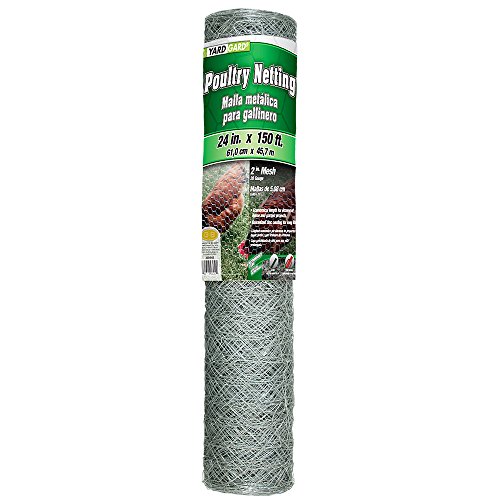
HEAVY DUTY MATERIAL – Made from strong yet lightweight 20‑gauge galvanized steel designed to endure outdoor conditions and long‑term farm use

[CUTTABLE, SPLICEABLE] Chicken wire mesh measures 16.9 inches x 32.8 feet, which is suitable for large areas. Galvanized chicken wire is soft and flexible but stronge. It is bendable and easy to cut. You can also join mesh together if the height is not enough. Chicken wire fencing is double hot-dip galvanized for maximum rust protection and longer life. Designed with double twist hexagonal, chicken fence is more durable and less likely to break

High-Quality Anti-Rust Process This hardware cloth is made from high-strength low-carbon steel wire, combining excellent strength with flexibility. After precision welding, the entire product undergoes a premium anti-rust treatment—hot-dip galvanization—with special reinforcement at all seams and corrosion-prone areas to ensure uniform, dense coating and outstanding rust resistance. This process grants the product superior weather resistance, making it an ideal choice for wire mesh fencing and long-term outdoor applications.