


Wondering how to keep pesky birds off your property without overspending? Making your own bird spikes can be quick, cost-effective, and just as effective as store-bought options.
Using simple materials like galvanized fencing wire or PVC pipe, you can create custom deterrents tailored to different bird sizes.
Keep reading to learn the easiest DIY methods and tips for a successful install.
Which Birds Are You Targeting: And Will Spikes Work?
You need to identify which bird species you’re targeting because bird spikes are not equally effective on all types. Pigeons are the primary threat; standard spikes are highly effective at stopping them. Seagulls, which have larger bodies, require wider spike arrays to prevent landing. Starlings and crows also respond well if the spike height and spacing match their larger size. For example, comparing carpenter bee traps shows how specific deterrents must be tailored to the pest’s size and behavior. Similarly, pond netting options can be selected based on the size of debris or animals you need to exclude from your water feature.
Spike performance drops significantly when dealing with small birds. Sparrows can often slip through standard tines, and some may even nest within them. Using one size of spike for all birds is ineffective. To get the best results, ensure continuous, correctly mounted coverage over flat ledges. For tiny species or active nesters, spikes may not be the right solution at all. Matching the spike design to the bird’s body size is crucial; mismatched spikes can turn into inviting perches instead of deterrents. Before committing to spikes, remember that persistent pests like rodents may force you to consider hardware cloth alternatives that resist chewing and gnawing damage.
Materials You’ll Need for DIY Bird Spikes
To assemble DIY bird spikes, you’ll need three main categories of materials: a base to mount the spikes, spike elements to deter birds, and fasteners plus tools for installation. For the base, options include galvanized 16-gauge fencing, UV-stabilized polycarbonate sheets, or narrow wood strips. These provide a sturdy surface to attach the spikes and should be resistant to weathering.
Spike elements can be created from cut fencing wire, plastic cable ties, or small nails. These should be sharp or pointed enough to discourage birds from landing without causing harm. When choosing spike components, consider their durability and ease of installation. For example, correct spacing and fixings are crucial to prevent birds from landing between spikes. Unlike bee suits, which are specifically designed to prevent wasp penetration through multiple fabric layers, bird spikes rely on physical obstruction rather than full-body coverage. For a comparable approach to ethical deterrence, consider how live rabbit traps use confinement rather than injury to manage pests.
Tools required include wire cutters, needle-nose pliers, and a drill. These will help you cut, shape, and secure the spike parts effectively. Safety gloves and a surface cleaner are also recommended to protect your hands and ensure a clean mounting surface. Always clean the mounting area thoroughly before applying construction-grade adhesive or installing with wood screws, ensuring your setup stays secure and ethical—aiming only to discourage landing, not to harm the birds.

package Includes: there are 2 pieces stainless steel bird spikes, each bird spike contains 30 bird spikes and a base; The length of the entire bird spike is about 25 cm/ 9.84 inches, of which the bird spikes are about 11 cm/ 4.33 inch long; This length prevents the birds from staying in yours; The house and windows settled

HUMANE & EFFECTIVE BIRD DETERRENT: These bird spikes are designed to visually discourage birds from landing while helping deter squirrels and reptiles from accessing food. The thorn-like shape mimics natural plants, creating a humane barrier that does not harm animals. The polished stainless steel surface reflects sunlight, enhancing the deterrent effect
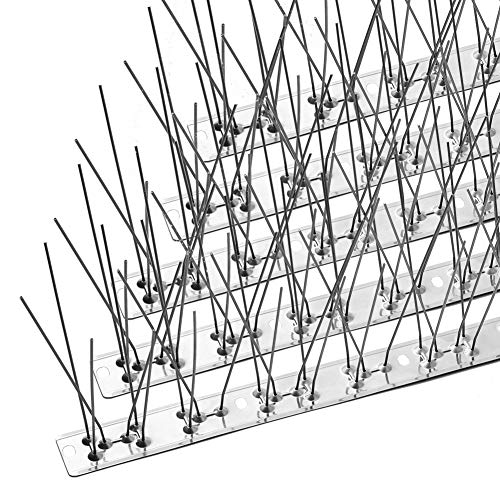
Efficient and Humane Bird Spikes: The stainless steel bird spikes imitate the structure of thorn plants and have bright surfaces that can reflect the sunlight. It makes good use of birds' weaknesses to help you solve the problem of excessive droppings and messy nesting
How to Make Bird Spikes From Fencing Wire
To make bird spikes from fencing wire, use strips cut from galvanized 16-gauge fencing with a 2-by-3-inch grid. This gauge and size ensure the wire is stiff enough to form durable spikes and resistant to rust. Start by cutting the strips to about one row wide. Then, bend the protruding wire ends upward at roughly 45 degrees, forming a fan of sharp points. Physical barriers are preferred over chemical or humane trapping methods for discouraging nesting. The wire structure itself has a consistent longevity without batteries, ensuring it remains effective as a passive deterrent indefinitely.
For denser coverage, fold the strip in half and then fold again, using pliers to crimp the bends tight so they stay secure. Always wear gloves and eye protection during this process because the sharp metal ends can spring back or cause injury. Once shaped, spread the spikes in alternating V-shapes to create even coverage across the area you want protected. Secure the base flat against the surface with roofing nails or screws, making sure the spikes are facing outward. This method leverages the wire’s durability to create an effective, long-lasting deterrent that prevents birds without trapping them.

High Quality Material: This Barb Wire Fence is made of hot dipped galvanized wire, Suitable for outdoor use, not easy to rust, it has 2 strands of wire, very Strong & flexable, There has mark to show the end of the wire when you unroll it
High Quality Material: This Barb Wire Fence is made of hot dipped galvanized wire, Suitable for outdoor use, not easy to rust, it is Strong & flexable, There has mark to show the end of the wire when you unroll it

Package includes 200 pcs steel Fencing Staples to meet your daily needs. Wire: approx. Ø 2.3 mm / length: 25 mm / width: 14 mm
How to Make Bird Spikes From PVC Pipe
To make bird spikes from PVC pipe, cut 1-inch diameter sections into 4- to 6-inch lengths using a hacksaw or PVC cutter. Ensure all smooth edges with sandpaper to avoid handling hazards and make the spikes safe to install. Place the spike elements at roughly 1-inch intervals along the strip, covering the entire landing area including edges, to prevent birds from landing between gaps. This method mimics the principle of a rabbit trap, where physical barriers block access to a desired space. PVC pipe offers durability against rain and sunlight, making it a weather-resistant choice that lasts longer than many alternatives, and unlike chicken wire it will not rust or be easily chewed through by persistent animals. Always wear gloves and goggles during the cutting process. Once prepared, use a strong adhesive like silicone sealant to bond the spike segments securely to a base strip, ready for installation on your desired surface. For an even cleaner kitchen, consider using fruit fly traps to address any lingering pests attracted by debris.

Made from high impact ABS, use adhesive or glue to bond in place

【Package】The outdoor pigeon spikes kit includes 4 packs of 10in (25cm) plastic base and bird spikes (3.3 ft total length).

DURABLE POLYCARBONATE BUILD: Made with sturdy plastic polycarbonate prongs and a UV-protected base, designed for outdoor use on ledges, fences, roofs, balconies, signs, beams, and other elevated surfaces.
Install Your Spikes: Clean, Glue, and Placement
Surface preparation is essential for a long-lasting spike installation. Scrape away guano, moss, dirt, or loose paint, then thoroughly wire-brush and dust the area. For greasy spots, use a dedicated cleaner and allow the surface to dry completely, as silicone adhesive needs a fully dry surface to bond properly. Very porous stone or metal surfaces should be primed before applying the adhesive. Proper surface prep ensures optimal adhesion and prevents spikes from loosening over time.

Weatherproof Exceptionally strong bonding power Works on wide range of materials

Great Adhesive for Bird Spikes ( 2 tubes will do approx 30 feet) Caulk Gun Not included

Exciting Quantities: You'll get 20 pieces of zip ties and 2 rolls of nano tape, plenty of quantity for installing your bird spikes.
Common Mistakes That Let Birds Land Anyway
Even the most carefully installed bird spikes can fail if you overlook key details. Birds use any exposed lip, gap, or incomplete edge to land, turning your barrier into a convenient perch instead of a deterrent. End-of-run openings or narrow strips on wide ledges create unprotected areas where birds can land on the rear or sides. Keep gaps between rows under 2 inches to prevent creating a perch zone. Using the wrong spike size allows smaller birds to perch between rods or bypass them altogether. Additionally, hidden bypass routes like vents or brackets nearby can undermine your setup. For similar reasons, possum traps often fail when bait is poorly chosen or placed in an exposed manner, as smart wildlife quickly learns to avoid obvious hazards. Debris buildup and loose strips also compromise the barrier’s integrity, providing landing spots right on top of the spikes. Regular inspection and maintenance are essential to ensure your bird deterrent remains effective. Selecting chicken wire with narrow enough mesh can further block small birds from squeezing through gaps around the spikes. For those concerned about humane treatment, studies confirm that properly installed bird spikes do not harm birds when maintained correctly.
Maintaining Your Bird Spikes and When to Try Netting
Regular maintenance is essential to keep your bird spikes effective. Inspect them at least twice a year, ideally in spring and fall. Look for bent, missing, or broken spikes because these gaps can give birds places to land and reduce the deterrent effect. Clean off debris and droppings using a soft brush and mild soap, then rinse thoroughly to prevent buildup that could compromise the spikes. If any sections are damaged, replace them immediately; do not reuse spikes that fall off or are attached with old adhesive, as they won’t stay secure. For reliable coverage, consider using high-quality chicken wire around broader coop areas instead of relying solely on spikes. For sturdier exclusion on larger openings, you might also prefer galvanized welded wire mesh as a more durable alternative. Storms and nearby tree cover can cause debris accumulation and damage, increasing your cleaning and maintenance needs. Observing bird behavior helps you identify when spikes are no longer enough. If birds are nesting or using wide areas like roof planes or balconies, consider using netting instead. Spikes are most effective on defined ledges, while netting is better for larger exclusion zones. For severe infestations, consider using professional pest control products that target the source of the problem. Often, combining spikes and netting offers the best protection against unwanted bird visitors.

High-Quality Anti-Rust Process This hardware cloth is made from high-strength low-carbon steel wire, combining excellent strength with flexibility. After precision welding, the entire product undergoes a premium anti-rust treatment—hot-dip galvanization—with special reinforcement at all seams and corrosion-prone areas to ensure uniform, dense coating and outstanding rust resistance. This process grants the product superior weather resistance, making it an ideal choice for wire mesh fencing and long-term outdoor applications.

Heavy Duty Chicken Wire – True 19 Gauge Steel: This 16in x 10ft chicken wire roll is built from real 19 gauge welded steel for dependable strength. Unlike thin or flimsy mesh, it holds its shape after installation, making it ideal for reinforcing chicken coops and outdoor fencing.

Material and size: The size of the hardware cloth is 16 inch×50 ft and 1/2 inch×1/2 inch thickness, adopt 19 guage hot-dipped galvanized material