

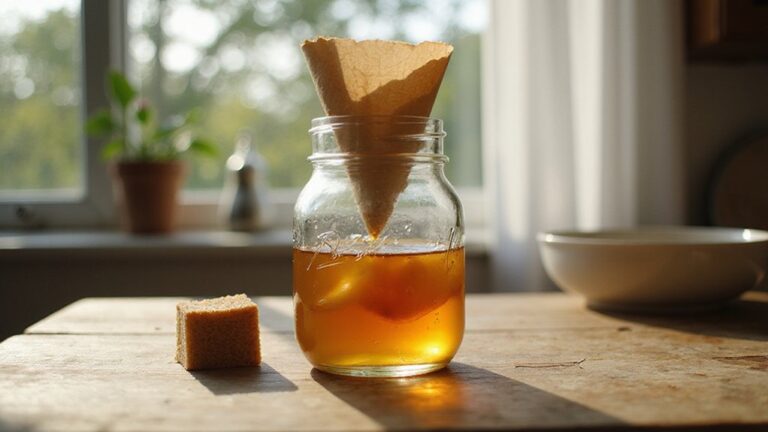
Struggling with pesky flies buzzing around your home? A simple homemade trap can help you catch them without spending a lot of money.
With just a few ingredients and a little setup, you can create an effective fly bait to lure and drown those annoying insects. Here’s how to make one that works better than store-bought options—straightforward and easy to maintain.
The 4-Ingredient DIY Fly Trap Bait That Works
To make an effective DIY fruit fly trap, use a mixture of just four household ingredients: apple cider vinegar, sugar, liquid dish soap, and warm water. Start by pouring one cup of apple cider vinegar into a jar. Add one tablespoon of sugar and stir until fully dissolved. Then, add a few drops of dish soap, which breaks the surface tension and causes the flies to sink instead of landing safely on the liquid. Using a plastic bottle trap as the container can provide extra durability and easier entry points for the flies. For those seeking a pre-made option, commercial fruit fly traps offer similar effectiveness without the need for assembly. For best results, position the trap near the most infested area, such as a fruit bowl or compost bin.
Avoid common pitfalls like substituting honey or wine as the bait base; these are less effective and can lead to failed traps. Another mistake is omitting the sugar, which provides the extra attraction flies need. Once the mixture is ready, pour it into a jar, cover the opening with plastic wrap, and poke small holes to allow flies entry. Refresh the bait every few days to keep it attractive and effective over time. Fruit flies are attracted to ripe or fermenting food and the volatile esters from ripening fruit, making this bait ideal for kitchen use.

COMPREHENSIVE COVERAGE: 4-pack of TERRO fruit fly traps for indoors with 180 days of lure supply provides comprehensive pest control coverage for your home's fruit fly infestations

Fast Acting & Long Lasting: Our formula is designed to bait & rid your home of fruit fly infestations fast; the powerful attractant lures fruit flies in as soon as the top is open; Lasts up to 30 days

COMPREHENSIVE COVERAGE: 6-pack of TERRO fruit fly traps for indoors with 270 days of lure supply provides comprehensive pest control coverage for your home's fruit fly infestations
What Attracts Flies and Why Does Their Sense of Smell Matter?
Flies are primarily attracted by specific smells that signal the presence of food, decay, or a suitable place to lay eggs. Their highly sensitive olfactory receptors located on their antennae enable them to detect faint odors from a distance. Compounds released by decaying meat, rotting fruit, animal waste, and fermenting sugars act as chemical signals—indicating that these spots are rich in nutrients or suitable for breeding. Flies’ chemoreceptors are tuned to these cues, locking onto decay and fermentation odors with high sensitivity. Warmth can enhance this attraction because it accelerates decomposition, releasing more odor molecules into the air. By understanding these chemical signals, you can better anticipate what draws flies and how to manage them effectively. Similarly, carpenter bee traps rely on olfactory cues to attract wood-boring pests by mimicking the scent of nesting sites. For water features, using pond netting prevents flies from accessing stagnant water where they might breed.
How to Choose the Right Bait for House Flies vs. Fruit Flies
To effectively attract house flies versus fruit flies, match your bait to their preferred scent profile. House flies are drawn to sweet, fermenting odors, so a mixture of apple cider vinegar with added sugar or brown sugar works well. Adding dish soap helps break the surface tension, causing the flies to drown when they land on the bait. Place this trap near trash cans or decaying organic material for best results. For outdoor wasp control, note that bee suits alone may not shield you from aggressive wasps if the bait attracts them too. For larger areas, consider deer fencing options that can also help keep larger pests away from your traps. For keeping crows away from your bait stations, bird spikes can be installed on nearby ledges to prevent them from perching.
Fruit flies, on the other hand, are attracted to the sharp, vinegary smell of rotting produce. Plain apple cider vinegar, warmed slightly to enhance aroma, is a effective bait. You can also add a small amount of honey or overripe fruit, but avoid oversweetening, as too much sugar can repel these flies. Using bright-colored traps in yellow or other vivid shades can further lure fruit flies, as they respond to color cues. House flies tend to ignore bright colors, so keep the trap color appropriate for your target pest. Combining the right bait with colored traps maximizes your chances of catching each type effectively.

4 PACK OF REFILLS: Use this 4-pack of liquid lure refills designed specifically for TERRO fruit fly traps, as the bait formula helps to provide continuous protection against fruit flies and gnats in your home for up to 180 days (45 days per refill)

DUAL-CAPTURE DESIGN — BAIT + STICKY SHEET: Fruit flies attracted to bait don't always go into the liquid. That's why ELEGENZO combines a bait trap with an adhesive sheet—the bait draws them in while the sticky surface catches flies that land or hover around the trap. Two ways to catch, in one compact design.

Premium Material: our ceramic fruit fly trap combines an elegant ceramic jar with a highly functional stainless steel lid. It effectively catches fruit flies while seamlessly blending with your kitchen decor aesthetic
Do Sweet or Protein Baits Catch More Flies Outdoors?
Protein baits generally catch more flies outdoors than sweet baits. They mimic decaying organic matter, which attracts scavenging flies and fruit flies seeking protein sources. Their strong scent penetrates outdoor odors from compost bins and plants, effectively drawing both male and female flies. In field studies, brewery-yeast protein baits have captured significantly more spotted-wing drosophila than sweet mixtures. Trapping mink requires careful trap choice and placement to ensure humane handling. Mosquito bits are a related product that uses a bacterial toxin to target mosquito larvae in standing water, rather than attracting adult flies. For garden setups, squirrel baffles can similarly protect bird feeders from persistent pests, though they serve a different purpose than fly traps.
Sweet baits work well for certain fruit flies that prefer fermenting sugars, especially near patios where odor control is a concern. They are cheaper to make and easier to prepare but tend to be less reliable outdoors because heat and rain dilute their scent more quickly. Protein baits, especially those mixed with vinegar, maintain their attractiveness despite environmental conditions. Overall, for trapping flies outdoors, protein-based lures tend to provide better results.

✅ WHAT makes the MOST ATTRACTIVE TOPWATER DRAGONFLY FISHING LURE? - has DOUBLE SKIRTED WINGS - 4/0 EWG Hook Included | Weighs: 0.25 oz | Length:3 inch

The 8 Pieces Flies with Box.Bionics Crystal Flash Silk Shrimp.Silvery Color.

Pouches dissolve and activate in water
Why Adding Dish Soap Makes Your Homemade Fly Trap Better
Adding a few drops of dish soap to your homemade fly trap significantly boosts its effectiveness. The soap reduces the surface tension of the liquid, preventing flies from landing safely on the surface. Without soap, flies can stay afloat by using their wings to balance on the liquid’s surface, allowing them to escape easily. The soap acts as a surfactant, breaking that support and forcing the flies to sink and drown. For a similar effect, a DIY indoor mosquito trap uses this same principle to capture mosquitoes. In addition, the dish soap disrupts the flies’ navigation. It weakens the cohesive forces of the bait liquid, making it harder for flies to use surface tension to orient themselves. This interference prevents them from pushing off again and ensures they drown quickly. Just a few drops of soap turn your simple attractant into an effective, passive kill trap—no poison needed. This physical action makes the trap safer, more eco-friendly, and easier to maintain while improving capture rates.
How to Build a Simple Funnel Trap That Flies Can’t Escape
To build a funnel trap that flies can’t escape, start with a plastic bottle roughly 1-liter in size. Cut near the shoulder of the bottle and invert the top so the neck points downward into the base. Secure the seam tightly with tape to prevent gaps—flies can slip out through even tiny openings. Keep the funnel tip close to, but not touching, your liquid bait to ensure entry remains open. Use a clear container that allows light to pass through; this helps flies see the trap and move upward toward it. The size of the container makes it easy to monitor and prevents overcrowding, which reduces the chance of escapes.
You don’t need batteries or chemical repellents for this trap. A simple paper funnel or a piece of plastic wrap with small puncture holes can work as long as it fits snugly and functions as a one-way passage. Leave enough depth in the base to securely hold trapped flies without flooding the opening of the funnel. Once they descend into the trap, their chances of escaping become nearly zero because they are mechanically prevented from leaving. This design relies solely on gravity and the flies’ natural movement toward the bait, making it an effective, chemical-free solution.
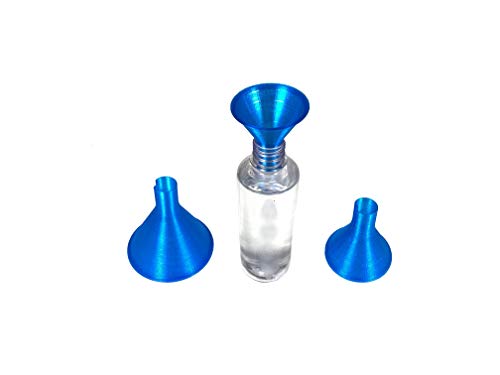
New Updated Model Improved Smooth Surfaces (No longer 3D printed)
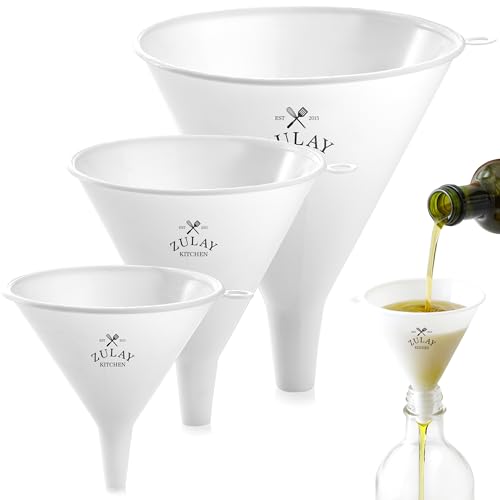
3-PIECE KITCHEN FUNNEL SET: Transfer dry or liquid ingredients while keeping the kitchen counter free from spills with these funnels. Available in three different sizes, these large mouth funnels can also be used in a chemistry lab, in restaurants, or anywhere you’d need a precise transfer.

Stay organized in kitchen with our small funnel set, featuring 6 small funnels which are useful tools and can help you transfer liquids quickly and easily
Where to Place Your DIY Fly Trap for the Best Results
Place your DIY fly trap 20 to 30 feet downwind of patios, decks, garbage bins, and compost piles. This positioning helps intercept flies at their source before they reach living or seating areas. Avoid setting traps right next to doors or where people gather, as this can attract flies directly toward you. For a similar approach to other pests, live traps for possums can be placed near known entry points to intercept them at their source. When selecting materials for the trap frame, consider using galvanized steel wire for durability and rust resistance. To construct an effective enclosure, ensure the trap design uses wire mesh that is tight enough to prevent rabbits from escaping.
Hang the trap 3 to 5 feet above the ground to match typical fly flight heights, increasing the chance of catching them. Adjust the trap’s location according to the season: in above 80°F weather, place it in shade to prevent the bait from spoiling. During cooler conditions, move it into sunny spots since flies seek warmth. Keep traps away from bright windows or indoor fans to prevent disrupting their effectiveness.
How Often to Change the Bait and What to Watch Out For
Change bait every 2 to 3 days during heavy infestations, and every 5 to 7 days for moderate indoor pressure. Bait longevity depends on trap placement; warmer, sunnier spots cause scent to dissipate faster. Look for signs like a faded smell, excessive evaporation, or a trap that’s full—these indicate it is time to replace the bait. Avoid letting bait become moldy or dirty, as this can repel flies rather than attract them. Proper sanitation is key: promptly dump dead flies, rinse the container thoroughly, and never reuse it for food. Keep traps away from food preparation areas and out of reach of children and pets. Do not add bleach or pesticides to the bait, as toxic fumes could form. Inspect the traps weekly; vinegar-based bait tends to need more frequent changing because its scent fades quickly. If fly activity drops before your scheduled replacement, refresh the bait immediately.
Why Store-Bought Traps Are Overpriced Compared to DIY
Store-bought traps are significantly overpriced compared to DIY options because you’re primarily paying for branding, packaging, and distribution rather than the actual bait. Refill costs range from $3.50 to $8 for a single container, while simple pantry ingredients like sugar and vinegar can be combined for just a few cents. For example, RESCUE! Reusable Fly Trap Refills, though highly rated, still command a premium price for their proprietary chemical attractant that targets a wide variety of filth flies. The chemical attractants in commercial refills have minimal added value; their higher price tag is mostly marketing markup. Over a season, repeatedly purchasing these refills can cost more than the trap itself, making it an inefficient expense. In contrast, a homemade bait mixture works just as well in any container and can be made with a small handful of inexpensive ingredients like apple cider vinegar and dish soap. For optimal results, you should also position the trap near windows or plants where gnats are most active. To maximize its effectiveness, ensure you cover the container with plastic wrap and poke small holes so gnats can enter but cannot escape. Why keep paying for fancy packaging or branded refills when a basic, homemade batch surpasses the cost and effectiveness?

REUSABLE: TERRO fly trap can be emptied and refilled with bait and water to continue trapping flies
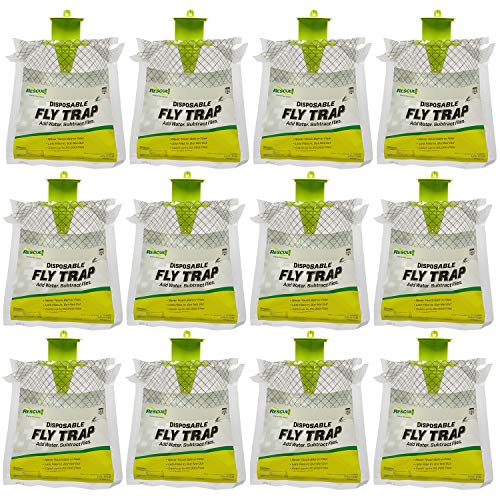
DRAWS FLIES AWAY FROM YOUR SPACE - This outdoor fly trap uses a powerful attractant to lure flies away from patios, trash areas, and outdoor living spaces—helping reduce their presence where you spend time.

Made for RESCUE! Reusable Fly Traps – This attractant refill is compatible with RESCUE! Reusable Fly Traps. It attracts many varieties of common nuisance and filth flies.