

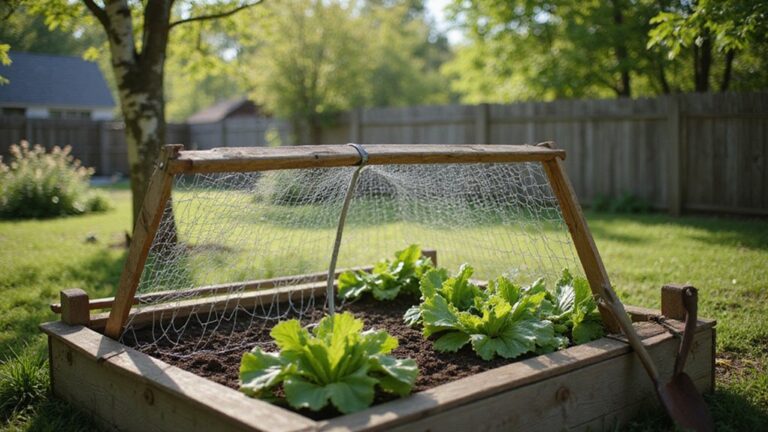
Wondering how to protect your garden from pests with a chicken wire cover? Building one can be simple and inexpensive, and it keeps critters out while letting sunlight through.
With just a few materials and some basic steps, you can create a sturdy, custom-fit garden cover that works for your space.
Keep reading to see how to craft your own at home.
How to Build a Chicken Wire Garden Cover From Scratch
Start by measuring your garden bed accurately to determine the size of your cover. Gather the necessary materials including lumber, chicken wire, and wire snips. Construct a rectangular frame using four pieces of lumber—cut to match the length and width measurements—then assemble the corners with screws, adding corner braces for stability. For taller plants, build a box-like structure with four vertical posts and a top frame to give extra height. Lay out the boards on a flat surface to ensure the frame stays square before screwing each joint for maximum strength. Keep in mind your plant’s height when deciding the cover’s height—adding enough clearance for growth prevents crowding or damage. Prepare a level soil base within the frame for better stability and to help block small animals from digging underneath. Stretch the chicken wire tightly across the frame, stapling it to the inside or back side, and fasten it completely around the perimeter. Snip off any excess wire and wear gloves to protect your hands from sharp edges during the process. Secure the cover with bungee cords to keep it closed and prevent animals from forcing it open. For additional protection, consider a top bee trap design that can be hung near the garden to intercept carpenter bees before they burrow into nearby wood. If you instead trap a skunk, remember to approach the cage slowly and cover it with a tarp to reduce the animal’s stress before releasing it safely from a distance. For any standing water that collects inside the cover, use mosquito dunks to prevent larvae from developing.

Perfect Fit: A complete plant protector from animals kit, including a roll of 11.8ft x 16in green chicken wire mesh, 4 metal supports, 20 zippers, and 10 U-shaped garden stakes to help you firmly secure. Designed specifically for 4 * 2 * 1ft raised garden beds, planters.

【Larger Size】 You will receive a roll of chicken wire mesh, which measures about 16 inches x 13.1 feet, longer than others, 1 x 0.63 inch fine mesh, wire diameter: 0.9mm, perfect chicken wire for floral arrangements and craft projects
How Much Chicken Wire to Cut for Your Garden Bed?
To determine how much chicken wire you need to cut for your garden bed, start by measuring the length and width of the bed. For a flat-topped cover, cut the wire to match the bed’s footprint plus a half-inch clearance on each side to allow for fitting. If you’re covering the sides, calculate the perimeter by multiplying two times the sum of length and width (2 x (L + W)). Be sure to add about two inches of extra wire along all edges for trimming and adjustments. For gardens near structures or other entry points, a high-frequency ultrasonic device can also help repel pests without physical barriers. For groundhog-prone areas, using a havahart trap is an effective method for capturing and relocating persistent pests. Using effective DIY mosquito traps inside the garden can also reduce insect nuisances without chemical sprays.
Use overlap techniques where panels meet by overlapping at least one hex opening and fastening both layers. This method strengthens the barrier against pests. When measuring, include about two extra inches on all edges to prevent gaps after tensioning. Choosing a roll width that minimizes the number of seams will help create a more continuous boundary. If your bed exceeds the width of the roll, cut multiple strips and plan for longer pieces, which are easier to trim than to extend. Careful planning at this stage will make tensioning and installation smoother, reducing the risk of gaps or loose spots.
Always choose tools based on wire thickness to ensure clean and safe cuts for your project.
How to Build a Simple Frame With Wood, PVC, or No Frame
To build a frame for your chicken wire garden cover, you can choose between wood, PVC, or go frameless. For wood frames, use 2x2s for lighter covers or 2x4s for larger, more robust spans. Secure joints with exterior-grade screws to withstand outdoor conditions. Adding corner bracing minimizes wobble, and installing a hinged front panel allows easy access for pest management. For soil-dwelling larvae, you can also apply mosquito bits to the garden to control fungus gnats without harming plants. For broader outdoor pest defense, consider researching effective mosquito traps to reduce adult mosquitoes near the garden area. For those wanting a comprehensive review, top mesh netting options can help compare different materials for garden protection.
PVC is ideal for hoop-style covers—it’s flexible and can be bent into arches from 10-foot pieces. Secure the arches with pipe clamps to keep them stable. This lightweight material makes seasonal covers quick to assemble and easy to remove, ideal for swapping out plant protection as needed. For added stability, glued connections prevent the arches from spreading during use.
If you prefer a no-frame approach, shape chicken wire into a cylinder or dome, overlapping cut edges for structural support. This method is quickest and suitable for small cloches or seedling covers. However, without a formal frame, the structure offers less stability for larger areas, so stabilizing anchors are essential to prevent shifting caused by wind or animal pressure.

ANTI-SAG GATE SUPPORT: Diagonal-braced cable system helps keep the gate frame square and reduce sagging or dragging. Ideal for garden gates, yard entrances, and driveway gates

Sturdy Durable: the raised bed corners brackets is made of nice quality heavy duty carbon steel with an anti rust coating, thick, durable, has good load-bearing capacity, is not easy to deform or break, comes with all of the hardware that you'll need, that easy to assemble; Your flower beds will have a clean, modern look

Versatile Gate Solution – Build or Reinforce with Ease This Full Frame Gate Fence Kit is ideal for both new construction and gate repairs. Use it to build a brand-new wooden gate with standard 2x4 lumber (not included) or to reinforce an existing gate that is sagging or dragging. Its adjustable design offers flexibility for DIY projects, saving you time and money while ensuring professional results.
The Fastest Way to Attach the Wire and Fold in Sharp Edges
Attaching chicken wire swiftly and securely involves choosing the right fasteners. Use galvanized U-shaped fencing staples for wood frames and drive them in quickly with a hammer or pneumatic stapler to secure the mesh. On metal surfaces, screws with fender washers or zip ties provide fast, non-metallic options. For a more durable and reusable attachment that prevents damage to the wire, consider using UV-resistant zip ties instead of staples. Clamp the mesh temporarily to keep everything aligned, then tack the corners first to prevent shifting during installation. Before fastening the cover in place, you should bait the trap with something irresistible like canned fish or peanut butter to ensure the skunk enters willingly. While a bee suit can shield against most stings, it is not a complete barrier against wasp stingers which can penetrate lighter fabrics. For an effective outdoor setup, consider using a top-rated horse fly trap instead to manage persistent pests.
Handling sharp edges properly is essential for safety. After trimming excess wire flush with the mesh, grab needle-nose pliers. Fold pointed ends inward or downward, twisting them into the mesh to eliminate exposed strands. This prevents skin or clothing from catching on sharp wire protrusions. Always work along each edge immediately after cutting; don’t wait, as exposed wire can cause injury. Wearing gloves during this process is a must because chicken wire can bite back quickly. With patience and the right tools, you can turn dangerous, jagged edges into a safe, smooth boundary structure.

Package includes 200 pcs steel Fencing Staples to meet your daily needs. Wire: approx. Ø 2.3 mm / length: 25 mm / width: 14 mm

280-Piece Value Pack: Includes 280 galvanized fence staples in a sturdy storage box, providing an ample supply for wire fencing installation, garden fence repairs, farm maintenance, and multiple home projects without frequent reordering.

Premium Material: wire staples are made of high-quality carbon steel with a galvanized surface, making it resistant to oxidation and rust, breakage, and deformation, enhancing durability and maintaining high performance even in harsh environments.
How to Anchor the Cover So It Stays Put in Wind and Weather
To keep your cover secured in wind and weather, perimeter anchoring is essential. Secure the chicken wire every 50 to 60 centimeters along the edges rather than only at the corners. Overlap the edge of the wire by 15 to 30 centimeters for a stronger hold. Match your anchors to your soil type: in firm ground, use heavy-duty U-shaped pins; in sandy or loose soil, opt for longer stakes or screw-in earth anchors to ensure stability. Use crop cover clips or similar fasteners to attach the wire to hoops or frame poles, providing additional structural support. Spread your anchors evenly around the perimeter, spacing them closer together on the windward side. Drive all anchors perpendicular into the soil for maximum hold. After storms, check every peg and re-secure any that have loosened to maintain consistent ground contact. For added resilience, consider using thickened powder-coated steel cage panels that are rustproof and weather-resistant. However, standard hardware cloth will eventually rust, so for lasting protection choose safe, non-corroding alternatives. For a more portable option, you can also use apple cider vinegar as an effective attractant in a nearby DIY trap to reduce the local pest population. To select the best material for your project, review top chicken wire options that compare durability and corrosion resistance for potted plants.