

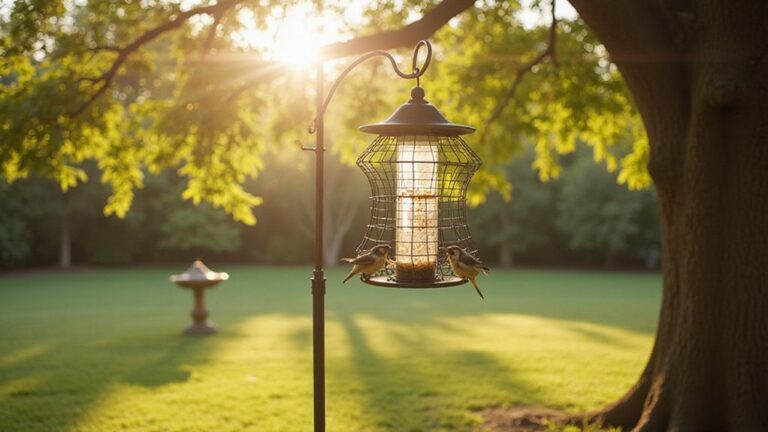
Struggling to keep squirrels away from your bird feeder? You’re not alone, and the good news is there are simple, effective ways to outsmart those clever pests.
By combining strategic placement, physical barriers, and some tasty deterrents, you can enjoy your birds without regular squirrel interruptions.
Here’s a straightforward method that actually works.
The 5-7-9 Rule: Your Foundation for Squirrel-Proofing
The 5-7-9 rule sets the essential distances for squirrel-proofing your bird feeder to prevent access. Start with the height: keep the feeder at least 5 feet off the ground, measured from the lowest point it can be accessed. Any perch attached to the feeder must stay above this height to prevent squirrels from standing on it and reaching the seed.
Next, consider overhead clearance: ensure the feeder is at least 9 feet below any nearby branch, roof edge, or gutter. Squirrels can drop down from overhanging limbs, so leaving this gap reduces the risk of a direct drop attack. An overhanging limb within this zone provides a quick drop route, bypassing ground-based barriers. For a similar protective barrier around potted plants, sturdy chicken wire can effectively block squirrels from digging into the soil. You can apply a similar logic to outdoor repellents by choosing Thermacell refills that offer reliable coverage against biting pests.
Finally, maintain a distance of 7 feet from any potential launch point, like tree trunks or fence rails. Squirrels can leap from these structures to reach the feeder, so staying beyond this range makes it harder for them to jump directly onto the feeder place. It’s important to measure from the squirrel’s likely access path rather than the feeder’s center, ensuring all three distances—height, overhead clearance, and launch point distance—work together to create an effective barrier. One weak spot undermines the entire effort. Just as nitrile gloves require verified chemical resistance to protect against solvents, your feeder relies on these verified distances to block squirrel access.
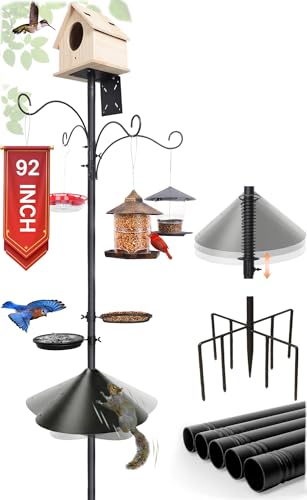

【SQUIRREL PROOF BIRD FEEDER POLE】Protect bird seed from squirrels with the large 19" cone squirrel baffle. The smooth surface helps block squirrels from climbing to feeders, reducing stolen seed and helping keep feeding areas cleaner. A great choice for bird lovers looking for a squirrel proof bird feeder pole for outdoor use.

【SUPERIOR SQUIRREL PROTECTION】: This 19-inch conical baffle forms a climb-proof barrier that effortlessly deters squirrels. Its slick, non-grip surface denies any foothold, ensuring your birdseed stays secure and your feeders remain impeccably clean.
Install a Baffle the Right Way: Size and Placement Count
Choosing the right size for your bird feeder baffle is crucial, with at least 18 inches in diameter being a good minimum. For stronger squirrel resistance, opt for a 24-inch baffle. Narrower baffles are easily bypassed because squirrels can reach around them or climb over the sides. A larger diameter creates a wider barrier, making it more difficult for squirrels to bypass the obstacle. Proper placement involves mounting the baffle 4 to 5 feet above the ground, with the bottom edge approximately 44 inches high. This height prevents squirrels from jumping from below or climbing up the pole to access the feeder. Ensure there is at least 12 inches of space between the top of the baffle and the bottom of the feeder. Keep the feeder at least 8 to 10 feet away from nearby trees or fences, which serve as launch points for squirrels. Use sturdy materials like metal or heavy plastic to withstand squirrels’ attempts to chew or claw through. For water features, pond netting also needs durable materials and proper sizing to prevent animals from tearing through. Secure the baffle with strong brackets and tight clamps to prevent wobbling or tilting, reducing the chance of squirrels finding a way around it. When installing a baffle on a shepherd’s hook, a split cone baffle can wrap around the post without removing the feeder. The same principles of using heavy plastic for durability apply here, as it resists gnawing and weather damage just like the materials recommended for a DIY bee suit. For roof-mounted bird spike solutions, stainless steel spikes provide a similarly durable barrier that deters perching birds without harming them.

Extra Wide And Large Design - 24 inch width makes the squirrel baffle more effective. With the squirrel baffle metal retainer, it gives the squirrel baffle more jiggle, no matter the squirrels fly up or climb up, they can't stand on the baffle, effectively stops squirrels from getting close to your bird food.

24” Extra Wide Squirrel Baffle for Feeder Poles: Our 24 inch clear squirrel baffle creates a larger protective barrier than standard guards, using an extra wide sloped design to disrupt climbing and jumping attempts. The wobbling surface prevents squirrels and raccoons from gaining stable footing, helping bird lovers protect valuable seed on outdoor bird feeder poles.
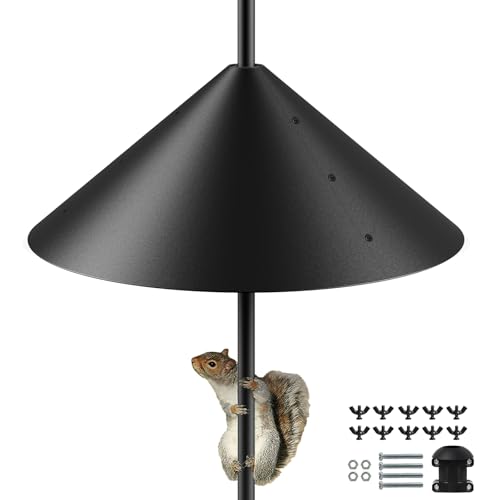
Chew-Proof Design with Metal: This metal slinky squirrel baffle made from sturdy metal materials designed to withstand outdoor conditions and squirrel chewing, ensuring long-lasting protection.
Pick a Mechanical Feeder That Actually Resists Squirrels
A mechanical feeder that resists squirrels uses a weight-activated, spring-loaded perch to keep unwanted visitors at bay. When a squirrel lands, the perch drops, closing access to the food. Smaller birds, however, can still feed normally because they don’t trigger the weight mechanism. This design takes into account typical bird behavior, ensuring lighter songbirds like chickadees aren’t discouraged. Placement is also key—mount the feeder away from trees or fences where squirrels launch from. A caged tube feeder made of metal can also block squirrel access while allowing birds to feed freely. Be sure the cage spacing fits your target birds and use hardened steel construction to prevent gnawing. Plastic cages are too flimsy and won’t withstand persistent squirrels. Combining a quality mechanical feeder with smart placement and proper tuning offers a reliable solution for squirrel-resistant bird feeding. Some models instead use a weight-activated spinning perch that gently tosses squirrels off without harming them, while larger birds like cardinals do not trigger it. For squirrels that do reach the feeder, a catch pole can be used to safely capture and relocate them without causing injury. As an added deterrent, you can attach a DIY Thermacell refill to the feeder pole, whose scent works to repel squirrels effectively without harming birds. When handling a trapped squirrel, always wear thick leather gloves to protect against bites and follow safe release techniques similar to those for skunks.

HANGING BIRD FEEDER: This bird feeder is great for your yard

WEIGHT-ACTIVATED SQUIRREL PROOF BIRD FEEDER : When a squirrel climbs on the feeder, its weight tiggers the closure of feeding ports, ensuring only birds can access the seeds.

【Weight-Activated Squirrel Proof Design for Less Seed Loss】Buteafly squirrel proof bird feeder features dual weight-activated perches that stay open for birds but close feeding ports when squirrels climb on. The durable metal body resists chewing, while the locking lid with metal clasp helps stop prying. This triple squirrel-proof design Less seed waste, less mess, and more reliable outdoor bird feeding.
Block Squirrel Jumping Points With Poles, Cables, and Pipe Sections
To prevent squirrels from turning your feeder into a high-jump course, you should block their launch points by positioning your pole at least 10 feet away from fences, trees, or decks. Squirrels can jump vertically up to 4 feet, so it’s important to install a pole-mounted baffle with its bottom edge positioned 4 to 5 feet above the ground. Ensure your pole is securely anchored to keep the baffle in place; stability is key. Use baffle materials such as a 24-inch-wide cone or cylinder, or a smooth stovepipe section about 8 inches in diameter and around 24 inches long. These options fully enclose the pole and eliminate footholds, making it difficult for squirrels to climb. On cable feeders, keep the lines isolated from nearby branches and add a baffle on the support arm. Top squirrel baffle reviews note that models with a dome or torpedo shape often provide the best coverage for bird tables. For additional protection, consider pairing these baffles with quality garden netting to shield your plants from foraging squirrels. Secure all components with clamps or U-bolts to prevent slipping, and you’ll effectively stop their acrobatic leaps. For those dealing with persistent pests, similar strategies for carpenter bee traps use baffle-like designs to block entry points around wooden structures.
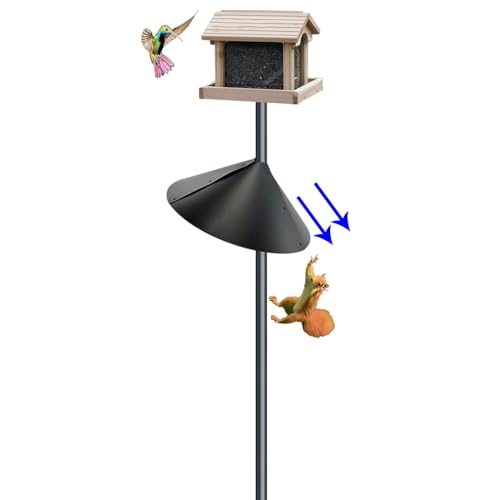
16.5-Inch Extra-Wide Design: Blocks squirrels, raccoons, and other rodents from climbing or jumping onto bird feeders. The broad, angled surface prevents animals from bypassing the baffle, reducing seed waste and keeping birds undisturbed.

Bigger and Wider Design: 19” diameter design makes this squirrel stopper more effective than other sizes. Larger sizes have greater jitter, no matter if rodents fly up or climb up, they will not be able to stand stably on the baffle. Anything smaller than 19 inches cannot step over this baffle easily, which means that the foods in your bird feeder can be specially provided to feathery friends instead of greedy squirrels or raccoons.

【Squirrel Baffle】: The proof squirrel baffle for bird feeder is more effective against squirrels than other sizes of baffles. This smooth sloping surface will make squirrels who get on top of it easily slide off, better protects the feeder and saves the bird food.
How Spicy Seed and Ground Cleanup Reduce Attraction
Spicy seed and ground cleanup work together to reduce squirrel attraction effectively. Capsaicin, the compound responsible for spicy flavor, is harmless to birds but intensely painful for squirrels because they lack the receptors that cause capsaicin’s burning sensation in mammals. Using treated sunflower seeds with around 100,000 SHU (Scoville Heat Units) creates a strong deterrent, and lower concentrations still discourage squirrels depending on the dose. This makes the seeds unappealing without reducing bird interest. When installing the feeder pole, choosing a pole baffle provides an additional barrier that prevents squirrels from climbing up to the feeder.
Additionally, keeping the ground beneath your feeder free of spilled seed minimizes the lure for squirrels. Fallen seed provides an easy backup food source that encourages repeat visits. Regular ground cleanup removes both visual cues and scent trails that squirrels follow to locate food. To further secure the feeder area, using hardware cloth over the ground or around the feeder base can prevent squirrels from accessing spilled seed through gnawing or digging. This combined approach—spicy seed to discourage feeding at the feeder and ground cleanup to eliminate residual attraction—creates a dual-action strategy. It consistently makes your birdfeeding area less appealing to squirrels, without deterring your feathered visitors. Over time, individual squirrel preferences may develop tolerance to the spicy seed, reducing its deterrent effect on persistent animals. Unlike mosquito control products like Bti-based dunks, which target specific larval stages, spicy seed only affects feeding behavior and requires consistent reapplication to remain effective.
Why Most Squirrel Deterrents Fail and What Actually Works
Most deterrents fail because they do not address the core issue of physical access. Weak baffles can be leapt over easily, and spinning gadgets only slow squirrels temporarily—they quickly adapt. Spicy seed may deter at first, but it becomes ineffective when other food sources are scarce. Gimmicks won’t outsmart their athleticism or problem-solving skills. For similar groundhog problems, strategic bait placement near the burrow entrance can increase trap success by encouraging immediate investigation.
The most effective solution is a layered physical setup. Position your feeder at least 10 feet away from anything a squirrel could launch from, like trees or fences. Use a smooth metal pole with a baffle placed 4 to 5 feet above the ground—this prevents climbing and jumping over. Combine this with a wire cage that excludes squirrels based on size. Together, these measures block access completely, respecting bird behavior while maintaining a robust barrier. For similar reasons, physical exclusion methods are also key in humane bird control, as bird spikes can harm birds if not installed correctly. Proper placement, smooth surfaces, and strategic distance are what ensure long-term success. To maintain this barrier effectively, you should monitor and replace any worn components periodically, much like checking the biological breakdown of ongoing pest prevention products.

18’’ Dome Baffle Squirrel-Proof:Smooth-surface squirrel baffle that effectively blocks the squirrels from reaching the feeders. For optimal protection, position the baffle at 6 feet above the ground and 10 feet away from tree trunks

【19.6Inch Oversize Squirrel Wil Not Easy To Climb】Most of other squirrel baffle on the market will choose steep slope design and give up the widening design, aim to refuse squirrel stand on the baffle. iBorn squirrel baffle design in extra large size, even if those animal climb on the pole, they will difficult to get touch of the edge of baffle. So that easy to fall down, squirrel have no chance to climb on it, and close to the feeder.

Squirrel Proofing Tip:We recommend bird feeders be placed at least 8 feet away from trees,fence and more than four feet off the ground.Because the clever squirrel may jump directly on the bird feeder through other places. Otherwise, any squirrel baffles will lose their protective function